Table of Contents
Introduction: When Emotions Get Complex — and That’s a Good Thing
More Than Just Feelings: How Emotional Intelligence Empowers Upper Elementary Students
In upper elementary classrooms, emotions start to get more complicated. Students aged 8–11 are forming deeper friendships, developing independence, and beginning to experience layered emotions—like being proud and nervous at the same time.
At this stage, emotional intelligence (EQ) becomes a key part of learning. According to the Collaborative for Academic, Social, and Emotional Learning (CASEL), “Social and emotional learning helps students build healthy identities, manage emotions, achieve goals, and show empathy for others.”
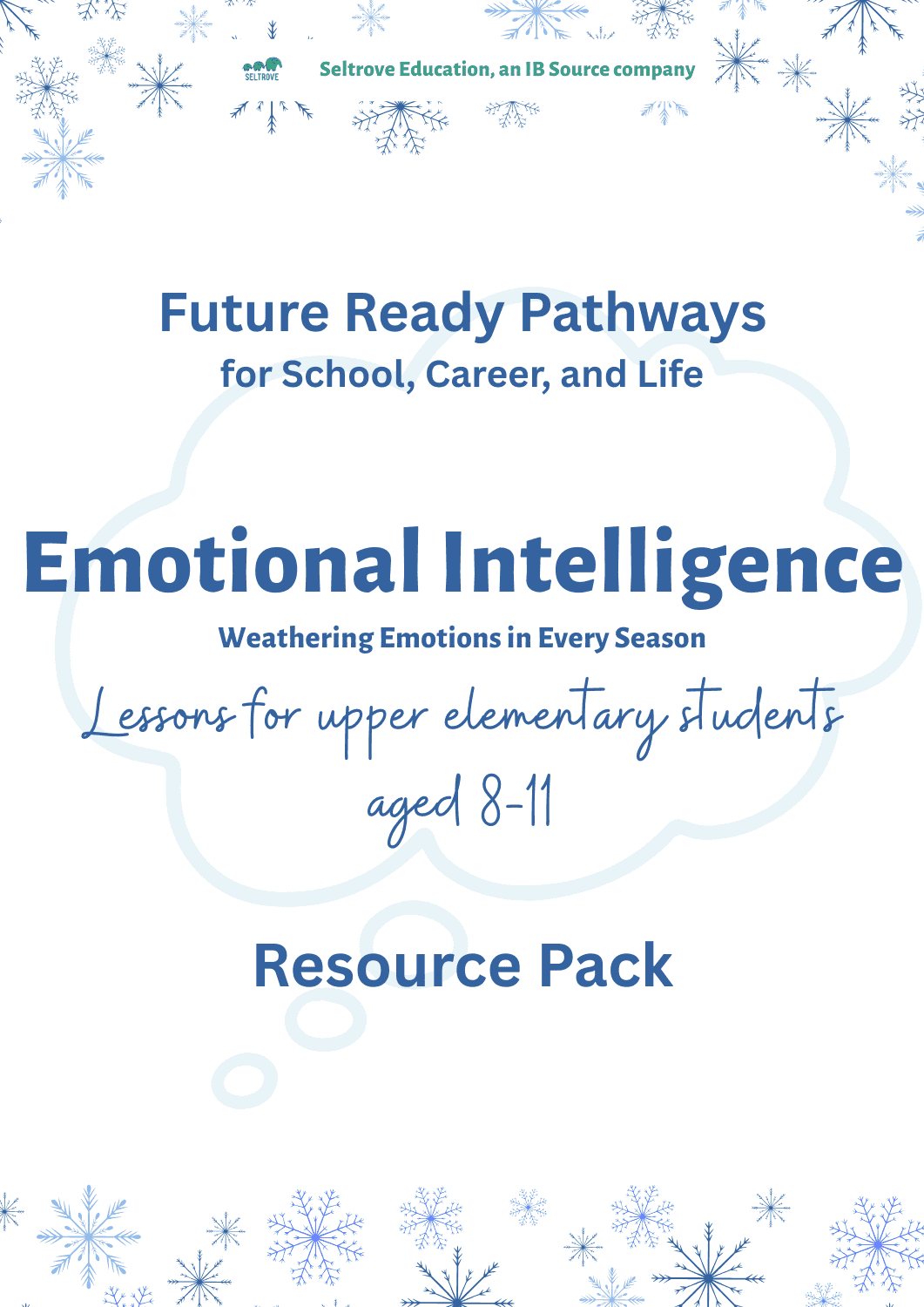
Seltrove’s Upper Elementary Emotional Intelligence Pack—Weathering Emotions in Every Season—guides students to identify, understand, and express emotions in ways that strengthen both academic success and personal wellbeing.
Why Emotional Vocabulary Is Power
Children in grades 3–5 know what “happy,” “sad,” or “mad” mean—but developing a bigger emotional vocabulary helps them explain their experiences with precision.
“Having more words for emotions is like having more colors to paint with—our emotional picture gets clearer and more interesting.” – Seltrove Education. Harvard’s Center on the Developing Child reinforces this idea:
“When children can label emotions accurately, they can manage them more effectively and build stronger relationships.”
By teaching nuanced words like disappointed, curious, or hopeful, educators give students tools to navigate increasingly complex emotional and social landscapes.
Empathy and Perspective: Seeing Beyond Themselves
At this age, students begin realizing that not everyone feels the same way about the same event. This awareness is the foundation of empathy.
In Seltrove’s Lesson 4, Understanding Emotions in Others, students explore tone, body language, and perspective-taking through group discussion and story-based activities.
As UNESCO’s International Bureau of Education highlights,
“Empathy is not an innate trait—it’s a learned skill essential for cooperation, conflict resolution, and inclusion.”
These lessons help students bridge differences, reduce conflict, and practice kindness both inside and outside the classroom.
Regulation and Resilience: Calming the Emotional Storm
Between ages 8–11, frustration, disappointment, and excitement can feel overwhelming. Seltrove’s activities—like Emotion Webs, Quick Write Journals, and Connection Circles—teach practical strategies for calming strong emotions and thinking before reacting. Research from the American Psychological Association (APA) shows that “students who learn emotional regulation strategies demonstrate improved focus, reduced stress, and higher engagement in learning.” These habits, once built early, support lifelong resilience.
The Academic Connection
Emotional intelligence doesn’t just improve social skills—it also boosts academic outcomes. A Yale University study found that “students with strong emotional awareness show better problem-solving, higher grades, and improved classroom behavior.”
When students learn to reflect on how emotions influence decisions, they’re also learning how to be self-directed learners—one of the strongest predictors of long-term success.
Conclusion: Teaching Kids to Feel, Think, and Grow
More Than Just Feelings: How Emotional Intelligence Empowers Upper Elementary Students
At its heart, emotional intelligence helps children understand that emotions aren’t obstacles—they’re guides. By nurturing empathy, regulation, and self-awareness in upper elementary students, educators are shaping confident, kind, and capable learners.
“The goal is not to avoid or suppress emotions, but to help children understand, manage, and use them in healthy ways.” – Seltrove Education
🌟 Explore Seltrove’s Upper Elementary Emotional Intelligence Pack and give your students the tools to turn feelings into lifelong strengths.
Emotional Intelligence: Weathering Emotions in Every Season (Upper Elementary) Teacher Resource Pack
$79.00
Future Ready Education Pack: Emotional Intelligence (Upper Elementary School) Downloadable & Printable Resource Pack for Teachers, Homeschools, and Parents Help your upper elementary students (ages 8–11) strengthen one of the most important skills for lifelong success—emotional intelligence. This ready-to-use resource… read more