Table of Contents
Introduction: Riding the Waves of Adolescence
Emotions in Motion: Building Emotional Intelligence During the Middle School Years
Middle school can feel like an emotional storm. Students aged 11–14 are navigating identity, independence, friendships, and self-image—all while their brains and bodies are changing at lightning speed.
In this dynamic stage, emotional intelligence (EQ) becomes not just helpful but essential. As CASEL explains, “SEL provides young people with the tools to manage emotions, establish positive relationships, and make responsible decisions during one of life’s most transformative stages.”
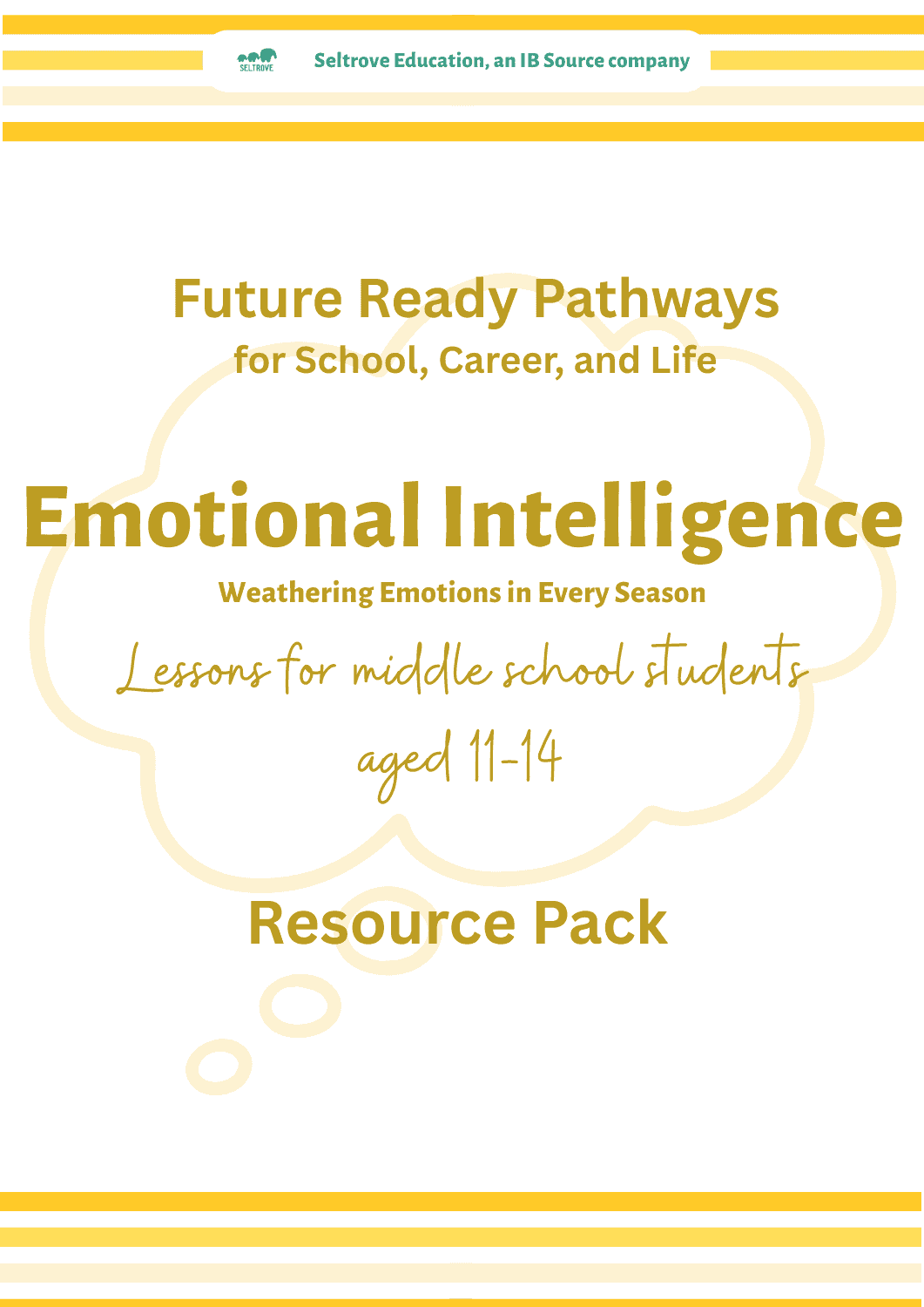
Seltrove’s Middle School Emotional Intelligence Pack meets students where they are, helping them translate emotions into insight, resilience, and meaningful action.
Understanding the Middle School Mind
Adolescents often feel emotions intensely but struggle to express them clearly. This is due to ongoing brain development—particularly in the prefrontal cortex, which governs impulse control and reasoning.
According to the American Psychological Association, “Adolescence is a critical period for developing emotional regulation and self-reflection—skills that directly influence academic and social success.”
Seltrove’s program helps students identify triggers, practice reflection, and manage reactions through guided journaling, discussion, and interactive games.
Self-Awareness and Identity: The Inside-Out Approach
At this age, emotions are deeply tied to identity. Through lessons like Exploring Complex Emotions and Using Emotions to Guide Choices, students learn to interpret what they feel and why they feel it.
“When teens understand that emotions are signals—not weaknesses—they can use those signals to make better decisions.” – Seltrove Education
This mirrors findings from Harvard Graduate School of Education, which reports:
“Developing emotional literacy gives adolescents a language for self-understanding and helps them make choices aligned with their values.”
Empathy: The Secret Ingredient to Connection
Social dynamics intensify in middle school—friendships form, shift, and sometimes fracture. Teaching empathy helps students navigate these moments with understanding rather than reaction.
The UNESCO Social and Emotional Learning Framework states,
“Empathy reduces conflict, encourages inclusivity, and fosters global citizenship.”
Seltrove’s Building Empathy and Connection lessons use role-play, storytelling, and online interaction analysis to help students practice reading emotions in others—a skill that strengthens relationships and reduces bullying.
Emotional Regulation: From Reactivity to Reflection
Middle schoolers need tools to pause, process, and choose their response. Techniques like Mind-Body Mapping and Chain Reaction Role-Plays show students how physical sensations, thoughts, and emotions are connected.
Research published in Frontiers in Psychology (2023) found that students who practice emotional regulation “report lower anxiety levels and improved concentration within eight weeks.”
These habits empower students to approach challenges calmly and thoughtfully—a key component of resilience.
The Payoff: Confidence, Connection, and Calm
Emotions in Motion: Building Emotional Intelligence During the Middle School Years
Students who understand their emotions are more confident in expressing themselves, more empathetic toward others, and better equipped to handle change.
“Emotional intelligence gives adolescents the skills to handle change, connect deeply, and thrive.” – Seltrove Education
🌟 Explore Seltrove’s Middle School Emotional Intelligence Pack and give students tools to transform emotions into confidence, empathy, and leadership.
Emotional Intelligence: Weathering Emotions in Every Season (Middle School) Teacher Resource Pack
$79.00
Future Ready Education Pack: Emotional Intelligence (Middle School) Downloadable & Printable Resource Pack for Teachers, Homeschools, and Parents Help your middle school students (ages 11–14) develop one of the most important skills for success in school and life—emotional intelligence. This… read more