Table of Contents
- Why Emotional Intelligence Matters from the Start
- Understanding Emotional Intelligence in Early Learners
- The Learning Rationale: Turning Feelings into Understanding
- Teaching EQ through Story, Play, and Reflection
- The Link Between Emotional Awareness and Academic Success
- Practical Ways to Foster Emotional Intelligence Every Day
- Why Early EQ Learning Builds Lifelong Skills
- Conclusion: Growing EQ, One Feeling at a Time
Why Emotional Intelligence Matters from the Start
Building Emotional Intelligence in Lower Elementary Students
When children enter the early years of school, they don’t just learn to read, write, and count—they’re also learning how to be. In these years, every playground disagreement, group project, and classroom celebration is a lesson in emotion. That’s where emotional intelligence (EQ) becomes essential.
According to the Collaborative for Academic, Social, and Emotional Learning (CASEL), emotional intelligence “helps children develop the skills to understand and manage emotions, set positive goals, feel and show empathy for others, establish and maintain positive relationships, and make responsible decisions.” In other words, EQ is the foundation for both academic and lifelong success.
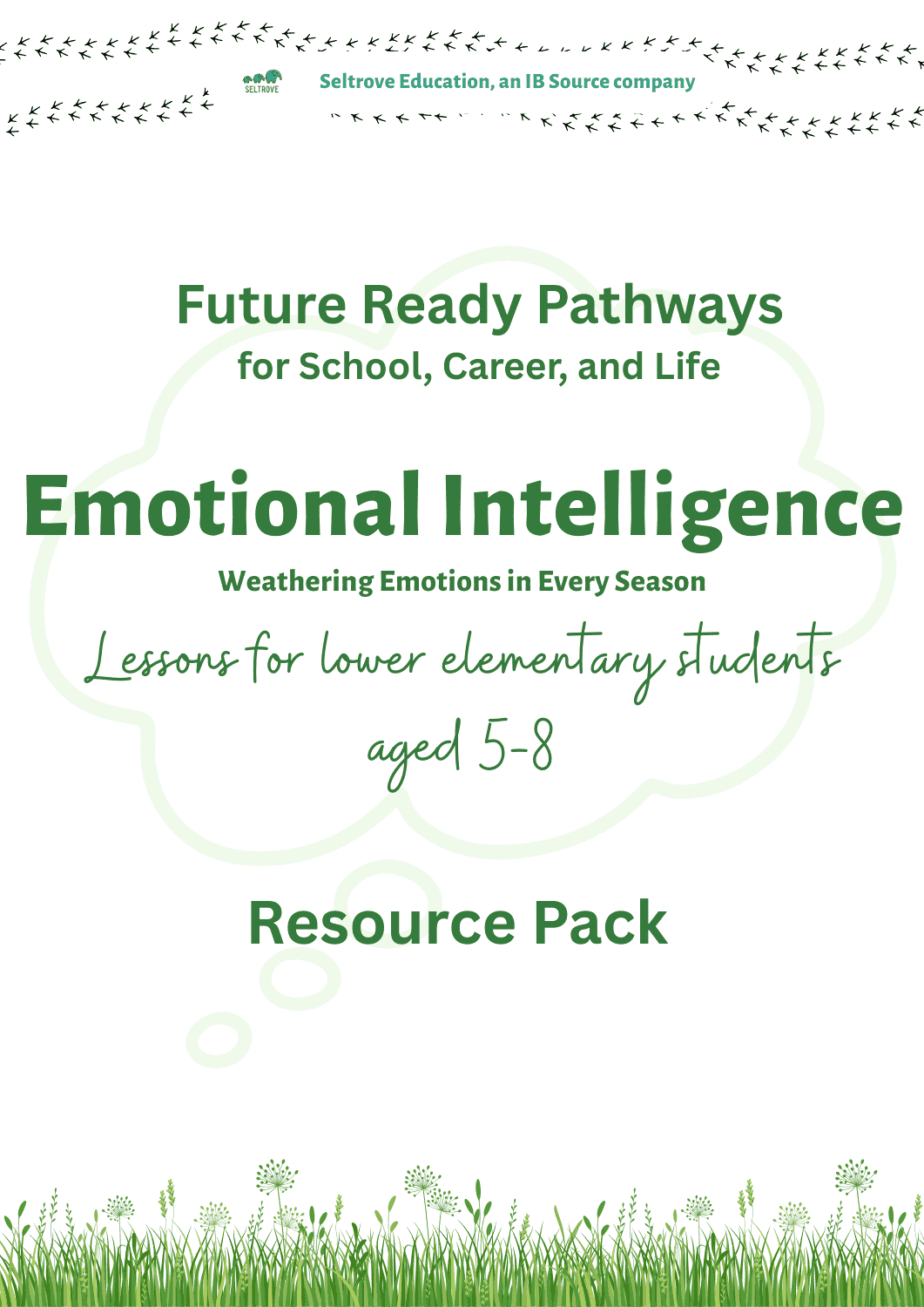
The Lower Elementary Emotional Intelligence lessons by Seltrove Education help students aged 5–8 explore these foundational skills through play, stories, and reflection. This stage is all about planting the seeds of self-awareness, empathy, and emotional vocabulary that children will build on throughout their school year.
Understanding Emotional Intelligence in Early Learners
Emotional intelligence for early elementary students isn’t about complex psychology—it’s about helping young children answer some very simple but powerful questions:
What am I feeling right now?
Why am I feeling this way?
What can I do with this feeling?
At ages 5–8, children are still learning that emotions are natural, that they change, and that everyone experiences them differently. The Seltrove Lower Elementary Emotional Intelligence Pack guides children through recognizing emotions in themselves and others, developing calming strategies, and connecting emotions to actions.
The program’s structure emphasizes gentle guidance and repetition. For instance, lessons use simple icons (like happy, thoughtful, or worried faces) and short reflection prompts that encourage children to describe what’s happening inside. Teachers and parents are encouraged to remind children that all feelings are okay, helping build emotional safety and trust—a key element in emotional learning.
The Learning Rationale: Turning Feelings into Understanding
According to the Teacher/Parent Guide in the Seltrove resource, lower elementary students benefit from exploring emotions through concrete examples and visual cues. They learn best when they can see, name, and act out emotions rather than discuss them abstractly.
“Children in early grades learn to recognize basic emotions, practice simple calming strategies, and begin to notice emotions in others,” notes the Seltrove Education team. “This foundational understanding supports empathy, self-regulation, and classroom harmony.”
At this stage, emotional intelligence instruction helps children:
Identify emotions using language like happy, sad, scared, or proud.
Understand causes—recognizing that something that happens to them or around them triggers a feeling.
Practice calming techniques, such as deep breathing or talking to an adult.
Recognize emotions in peers, strengthening empathy and friendship.
Link emotions to behavior, helping children understand that feelings can guide their choices.
This mirrors the American Psychological Association’s emphasis on early emotional education: “Young children who can identify and express their emotions are better equipped to manage frustration, handle challenges, and engage positively with others.”
Teaching EQ through Story, Play, and Reflection
One of the most effective approaches to emotional learning for this age group is through storytelling and play. The Seltrove lessons encourage educators to use familiar picture books, short stories, and imaginative play to connect emotions to real-life experiences.
For example:
Reading a story about a character who feels nervous about starting school helps children label that feeling as nervousness, not just sadness.
Drawing emotion faces or acting out scenes lets students embody what those feelings look and feel like.
Reflection questions such as “What might make someone else feel the same way?” prompt early perspective-taking.
The “Using Texts to Support Learning” approach in the Seltrove guide reinforces this flexibility—teachers can integrate emotional discussions into any classroom book or story rather than needing specific materials. This ensures emotional intelligence instruction naturally fits within daily learning.
The Link Between Emotional Awareness and Academic Success
Building Emotional Intelligence in Lower Elementary Students
It’s not just about feelings—emotional intelligence supports every other area of learning. Research published by CASEL and Yale University’s Center for Emotional Intelligence found that students with higher EQ have stronger academic outcomes, better classroom behavior, and improved problem-solving skills.
When students understand their emotions, they:
Spend less time distracted by conflicts or frustration.
Recover faster from mistakes or challenges.
Engage more actively in group learning.
Feel safer taking risks and sharing ideas.
In lower elementary classrooms, where children are forming their sense of self as learners, this can make a transformative difference.
As UNESCO’s 2023 report on emotional education states, “Social and emotional learning is as fundamental as literacy—it teaches students not only to think but to care.”
Practical Ways to Foster Emotional Intelligence Every Day
You don’t need a special occasion to build EQ—it can be woven into every school day or family routine. Based on Seltrove’s recommendations and CASEL’s five core SEL competencies, here are a few practical strategies for nurturing emotional growth in young learners:
1. Start Each Day with an Emotional Check-In
Use a “Feelings Chart” or color-coded zones to let students express how they’re feeling as they begin the day. This helps normalize emotional expression and gives teachers early insight into how students might need support.
2. Name It to Tame It
Encourage students to identify what they’re feeling. Neuroscience research by Dr. Dan Siegel shows that labeling emotions activates the brain’s logical centers, helping calm the nervous system.
3. Use Stories to Explore Feelings
Integrate emotional vocabulary into reading time. Ask, “How do you think the character feels right now?” or “What might they do next if they feel disappointed?”
4. Model Calm and Reflection
Teachers and parents who openly describe their emotions (“I’m feeling frustrated, so I’m going to take a deep breath”) demonstrate emotional regulation in action.
5. Celebrate Kindness and Empathy
Create moments for students to notice and appreciate acts of kindness in their peers. Recognizing empathy reinforces it.
Why Early EQ Learning Builds Lifelong Skills
The benefits of early emotional intelligence education extend far beyond elementary school. Students who develop strong EQ skills at this stage are more likely to show:
Greater academic motivation.
Stronger communication and collaboration.
Lower levels of stress and anxiety.
Better conflict resolution and peer relationships.
As children move into upper elementary and middle school, they will face increasingly complex social and emotional challenges. The groundwork laid in these early years prepares them to handle change, disappointment, and growth with resilience.
“Emotional intelligence is not a ‘soft skill’—it’s a human skill,” explains the CASEL research team. “It supports success in school, work, and life.”
Conclusion: Growing EQ, One Feeling at a Time
Building Emotional Intelligence in Lower Elementary Students
Developing emotional intelligence in lower elementary students is about helping them understand themselves so they can better understand others. Through small, consistent lessons—naming emotions, identifying causes, practicing calm, and showing empathy—children learn to build strong emotional foundations that last a lifetime.
The Seltrove Emotional Intelligence Resource Pack for ages 5–8 makes this process engaging, age-appropriate, and adaptable. Whether used in the classroom or at home, these lessons show that teaching emotional literacy is one of the most powerful ways to nurture confident, compassionate learners.
🌟 Ready to bring emotional learning to your classroom? Explore Seltrove’s “Future Ready Pathways for School, Work, and Life” resources to start building EQ today.
Emotional Intelligence: Weathering Emotions in Every Season (Lower Elementary) Teacher Resource Pack
$79.00
Future Ready Education Pack: Emotional Intelligence (Lower Elementary School) Downloadable & Printable Resource Pack for Teachers, Homeschools, and Parents Help your young learners (ages 5–8) build one of the most essential skills for lifelong success—emotional intelligence. This engaging, ready-to-use resource… read more