
Table of Contents
- Deep Dive IBDP Physics: - E.5 Fusion and Stars Teacher Resource Pack
- 🌟 Resource 1: Understanding the Role of Mass in Stellar Evolution
- Resource 2: Exploring Stellar Temperature and Color Using Wien’s Displacement Law
- 🚀 Making Astrophysics Accessible in the IB Classroom
- 🧪 Internal Assessment Ideas
- 🌠 Inspire Curiosity with Stellar Science
Deep Dive IBDP Physics: - E.5 Fusion and Stars Teacher Resource Pack
In the vast cosmos, stars serve as both the building blocks of galaxies and beacons of learning for physics students. For IBDP Physics educators, teaching stellar phenomena offers an extraordinary opportunity to blend theoretical rigor with celestial wonder. To support your curriculum delivery, we proudly present two comprehensive classroom resources:
Understanding the Role of Mass in Stellar Evolution
Exploring Stellar Temperature and Color Using Wien’s Displacement Law
These resources are designed to engage students in deep thinking about astrophysics through data analysis, calculations, and research. They align with multiple strands of the IBDP Physics curriculum, particularly Topic 6 (Astrophysics) and Topic E (Astrophysical Processes).
🌟 Resource 1: Understanding the Role of Mass in Stellar Evolution
Curriculum Connection:
Topic E: Stellar Evolution
Topic 6: The Hertzsprung–Russell (HR) Diagram
Key Focus: Mass-luminosity relationship, star lifecycle, stellar remnants
What It Covers:
This activity helps students explore how the mass of a star determines its fate, from its initial classification to its end stages—white dwarf, neutron star, or black hole. It’s a complete inquiry into the stellar lifecycle through quantitative and conceptual analysis.
Key Learning Objectives:
Apply the mass-luminosity relationship:

Estimate the lifespan of stars using:
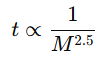
Plot the evolution of low- and high-mass stars on the HR diagram
Predict the final stage of a star based on its initial mass
Highlights for Classroom Use:
Calculate the luminosity and lifespan of stars ranging from 0.8 to 20 solar masses
Engage in critical comparisons between Sun-like stars and massive blue giants
Research supernova events and correlate with neutron star or black hole formation
Explore how stars contribute to the chemical enrichment of galaxies
Why Educators Love It:
Strengthens conceptual links between mass, luminosity, and temperature
Provides meaningful practice in graphing and equation-based reasoning
Encourages cross-topic integration with mechanics, thermodynamics, and cosmology
SEO Keywords: stellar evolution worksheet, mass-luminosity relationship IB physics, HR diagram classroom activity, fate of stars lesson plan, supernova vs white dwarf IBDP.
Resource 2: Exploring Stellar Temperature and Color Using Wien’s Displacement Law
Curriculum Connection:
Topic E: Radiation from Stars
Topic 6: Spectral Classification
Key Focus: Blackbody radiation, Wien’s Law, color-temperature analysis
What It Covers:
This resource enables students to understand how a star's temperature is inferred from its color, using Wien’s Displacement Law:

where λmax\lambda_{\text{max}} is the peak wavelength, TT is the temperature in Kelvin, and bb is Wien’s constant.
Key Learning Objectives:
Use Wien’s Law to calculate a star’s surface temperature from its peak wavelength
Identify stars like the Sun, Betelgeuse, and Sirius on the HR diagram based on temperature and color
Understand spectral classification (OBAFGKM) and correlate it with star types
Graph temperature vs. wavelength and analyze the electromagnetic spectrum
Real-World Applications:
Compare red giants (cool, long-wavelength) vs. blue giants (hot, short-wavelength)
Examine how spectral type relates to stellar temperature and life expectancy
Apply concepts to explore planetary habitability and stellar environments
Why Educators Love It:
Makes abstract ideas like blackbody radiation and spectral analysis tangible
Integrates data literacy with astrophysics and graphing
Promotes connection between observational astronomy and theoretical physics.
🚀 Making Astrophysics Accessible in the IB Classroom
These two resources collectively provide a complete astrophysics mini-unit that covers:
The origin and evolution of stars
The role of mass in defining a star’s life path
Temperature-driven classification using observable light
Connections between equations and the real night sky
They foster key IBDP skills:
Data analysis and graphing
Equation application and modeling
Scientific reasoning and ethical implications (e.g., enrichment of the universe through supernovae)
🧪 Internal Assessment Ideas
Both activities naturally lead to rich IA opportunities:
Investigate how varying peak wavelengths influence classification on the HR diagram
Model the lifespans of stars across spectral classes
Analyze light from star spectra using software or databases
Compare theoretical predictions with actual astronomical observations.
🌠 Inspire Curiosity with Stellar Science
Teaching about the stars isn’t just about astrophysics—it’s about giving students a cosmic context for their scientific skills. These resources help educators create a rich learning experience that ties math and models to the breathtaking life and death of stars.
Whether you’re guiding students through calculations or inspiring awe with the scale of a supernova, these resources give you everything needed to deliver IBDP physics with clarity, curiosity, and cosmic impact.
👉 Add these engaging and curriculum-aligned lessons to your classroom today—and help your students explore their place in the universe.