
Table of Contents
Deep Dive IBDP Physics: - D.5 Electromagnetic Waves Teacher Resource Pack
Understanding the fundamental behaviors of light and nuclear radiation is key to unlocking the mysteries of both the subatomic and cosmic realms. In the IBDP Physics curriculum, students are expected to grasp not only how light and radiation behave, but also how these phenomena are measured, harnessed, and applied in modern science and technology.
To empower educators and deepen student engagement, we’re proud to present two powerful classroom resources:
Investigating Gamma Rays in Nuclear Physics
The Speed of Light and Its Constant Value
These resources provide hands-on and research-based experiences, aligning with IBDP Physics topics like electromagnetic waves, nuclear physics, and relativity. With these tools, your students can move beyond memorization to genuine conceptual mastery.
☢️ Investigating Gamma Rays in Nuclear Physics
Curriculum Link:
Topic D.5 – Electromagnetic Waves
Topic A.2 – Forces and Momentum
Topic B.4 – Thermodynamics
This rich, research-oriented resource introduces students to gamma radiation, the highest-energy electromagnetic wave, through a blend of research, simulation, and class demonstration. Students explore gamma ray production, their medical and industrial applications, and the critical safety protocols required when working with such powerful radiation.
Learning Objectives:
Understand how gamma rays are produced in nuclear decay and reactions
Analyze the biological effects of gamma radiation, including DNA mutation and therapeutic applications
Explore medical and industrial uses, including radiotherapy and equipment sterilization
Evaluate the effectiveness of radiation shielding using materials like lead and concrete
Core Activities:
Students conduct group research projects on different aspects of gamma rays (e.g., production, sterilization, cancer therapy)
Presentations incorporate visual aids, including radiation diagrams and shielding materials
Simulated demonstrations (or real if possible) explore how gamma rays pass through various substances and how different materials attenuate their intensity
Key Equations:
Attenuation formula:
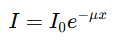
where II is final intensity, μ\mu is the linear attenuation coefficient, and xx is shielding thickness
Photon energy

where EE is energy, hh is Planck’s constant, and ff is frequency
Benefits for IB Educators:
Covers nuclear physics, wave behavior, and health physics in one integrated lesson
Supports real-world application and discussion on ethical usage of radiation
Easily adaptable for IA extensions on attenuation and shielding experiments
The Speed of Light and Its Constant Value
Curriculum Link:
Topic D.5 – Electromagnetic Waves
Topic A.2 – Forces and Momentum
Topic B.3 – Thermodynamics
This interactive resource offers students a comprehensive journey through historical and modern methods of measuring the speed of light, and helps them appreciate its central role in modern physics, particularly in Einstein's theory of relativity.
Learning Objectives:
Understand the constancy of the
 as a universal constant
Investigate historical experiments, from Rømer's observations to Michelson’s rotating mirrors
Conduct or simulate modern time-of-flight measurements
Explore the relationship:

between speed, frequency, and wavelength
Activity Highlights:
Students research and present on key historical breakthroughs in speed of light measurement
Perform hands-on or simulated experiments to calculate the speed of light using lasers and timing systems
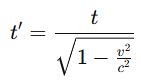
Discuss relativistic effects, such as time dilation, using:
Why It Works:
Offers cross-topic integration of waves, motion, and relativity
Sparks curiosity about space, time, and fundamental limits in nature
Encourages analytical thinking and historical perspective
Suggested Extension:
Connect with astronomy and cosmic distance calculations using redshift and light-speed limits
Explore gravitational lensing and how the constancy of light’s speed shapes our universe
Why These Resources Belong in Your Physics Lab
✔ Directly Aligned to IBDP Aims and Objectives
These activities address both core content knowledge and skills development, including:
Research and communication (TOK connections)
Mathematical modeling and graphical analysis
Experimental design and ethics in science
✔ Multi-Modal Learning
Students interact with content through:
Research
Visual presentations
Group collaboration
Hands-on experiments or digital simulations
This approach supports differentiated learning and maximizes engagement.
✔ Ready-Made for IA Inspiration
Each activity includes:
Measurable variables (e.g., shielding thickness, light travel time)
Real-world contexts
Clear links to IBDP assessment criteria
Potential IA topics could include:
Measuring attenuation of gamma radiation through different materials
Analyzing time-of-flight variations in different media for light
🚀 Illuminate Your Physics Curriculum with Real-World Relevance
Both gamma radiation and the speed of light are more than academic topics—they are gateways to understanding how the universe works. With these thoughtfully curated IBDP Physics resources, you’ll empower your students to explore, question, and model the invisible forces that shape our world.
By combining curriculum rigor, interactive design, and real-life context, these resources help students build knowledge that’s deep, applicable, and unforgettable.
👉 Add them to your teaching toolkit today and elevate your physics classroom to light-speed excellence.