Table of Contents
Why Introduce AI Literacy in Early Elementary?
AI Literacy for Kids Ages 5–7: Teaching Young Learners About Artificial Intelligence
Children as young as five are already surrounded by artificial intelligence, whether they realize it or not. Voice assistants respond to their questions, tablets suggest new videos, and educational apps adapt to their progress. At this stage, many children see technology as “magical.” Without guidance, they may develop misconceptions — such as thinking that machines have feelings, friendships, or even the ability to love.
AI literacy for early elementary students is not about coding or technical jargon. It’s about helping children understand the difference between humans and machines, while building the habits of safety, curiosity, and critical thinking. These early lessons form the foundation for digital responsibility that will serve them throughout school and life.
What Young Learners Need to Understand
For ages 5–7, AI literacy should focus on simple, concrete ideas:
AI is made by people. Machines and apps don’t think or feel. They follow instructions written by humans.
AI follows patterns. Just like a puzzle or a game with rules, AI makes decisions by matching patterns in data.
AI can be helpful. It can recommend videos, help with spelling, or play music, but it’s still just a tool.
AI can make mistakes. Just like a student learning to read, AI doesn’t always get things right.
Humans are unique. Only people can love, show empathy, and be true friends.
At this stage, children are developing social-emotional skills like empathy, kindness, and responsibility. Teaching AI alongside SEL makes it clear that while technology can be useful, human relationships and judgment are always more important.
Strategies for Teaching AI Literacy to Ages 5–7
1. Use Stories and Characters
Stories are one of the best tools for teaching abstract concepts. For example, tell a story about a robot that can sort toys by color but doesn’t know what “favorite” means. This shows that AI can follow rules but doesn’t truly understand feelings. Picture books with robots or friendly machines can also spark conversation.
2. Sorting Games
Children can “play AI” by sorting objects. For example:
“If it’s round and red, put it in this basket.”
“If it ends in ‘ing,’ put it here.”
After the game, ask: “Did the robot know what the object was? Or did it just follow rules?” This introduces the idea of pattern recognition.
3. Compare AI vs. Humans
Encourage children to reflect on differences:
AI can repeat patterns quickly, but only humans can imagine a new story.
AI might “say” it understands, but only humans can care.
This builds early critical thinking.
4. Practice Digital Safety
Even at this age, children can learn:
Don’t share personal information with devices.
Always ask an adult if a website or app is confusing.
Remember that friends are people, not machines.
These lessons create safe habits from the very beginning.
The Role of Parents and Teachers
Parents and educators don’t need technical expertise to guide these lessons. Their role is to ask questions, encourage curiosity, and model safe habits. For example:
When a child asks, “How does my iPad know what I like?” adults can say, “It noticed what you watched before. It doesn’t know you — it just follows patterns.”
If a child shares a “secret” with Alexa, gently explain: “Alexa is a tool, not a person. Only people can keep secrets.”
By giving simple explanations, adults help children see AI clearly and avoid confusion between people and machines.
Why It Matters
By the end of lower elementary, children who practice AI literacy will:
Know that AI is not alive.
Recognize that machines follow rules and patterns.
Feel comfortable asking critical questions about technology.
Understand basic safety rules for digital interactions.
Value human connection over machine responses.
These small but significant steps prepare them for more advanced concepts later in school.
Final Thoughts
AI Literacy for Kids Ages 5–7: Teaching Young Learners About Artificial Intelligence
AI may seem far too advanced for young children, but early lessons are less about technology and more about human values, curiosity, and safety. When children ages 5–7 learn that AI is a tool created by people, they begin their digital journey with confidence and clarity. And when these lessons are paired with empathy and responsibility, they grow into thoughtful digital citizens who understand that while AI is powerful, nothing replaces the love and care of human relationships. Find out more at www.seltrove.com
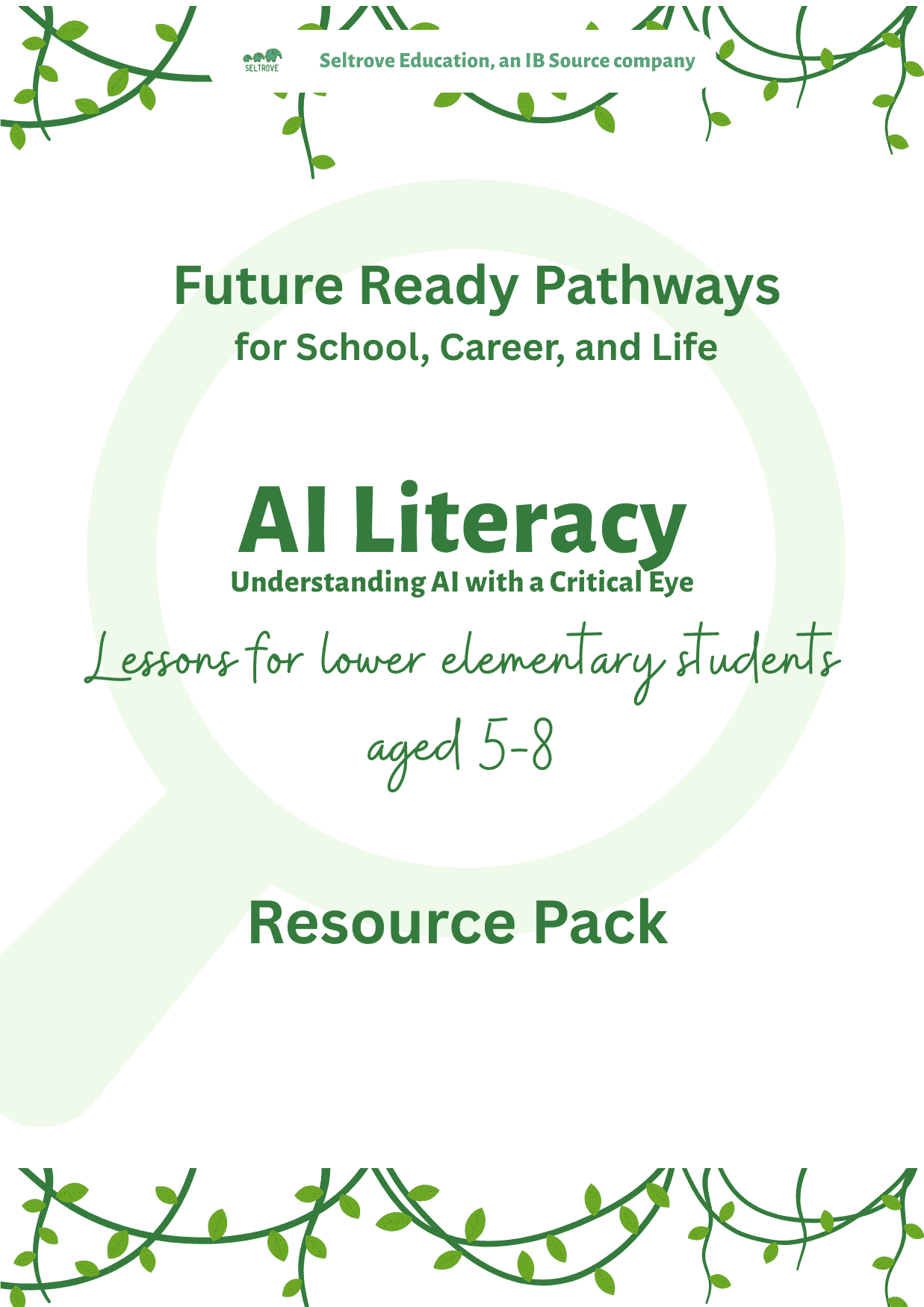
AI Literacy – Understanding AI with a Critical Eye (Lower Elementary) Teacher Resource Pack
$79.00
Downloadable & Printable Resource Pack for Teachers, Homeschools, and Parents Introduce your youngest learners to the world of artificial intelligence in a fun, age-appropriate way.Designed for lower elementary students (ages 5–8), this pack helps children recognize where AI shows up… read more