Table of Contents
Why Teens Need AI Literacy
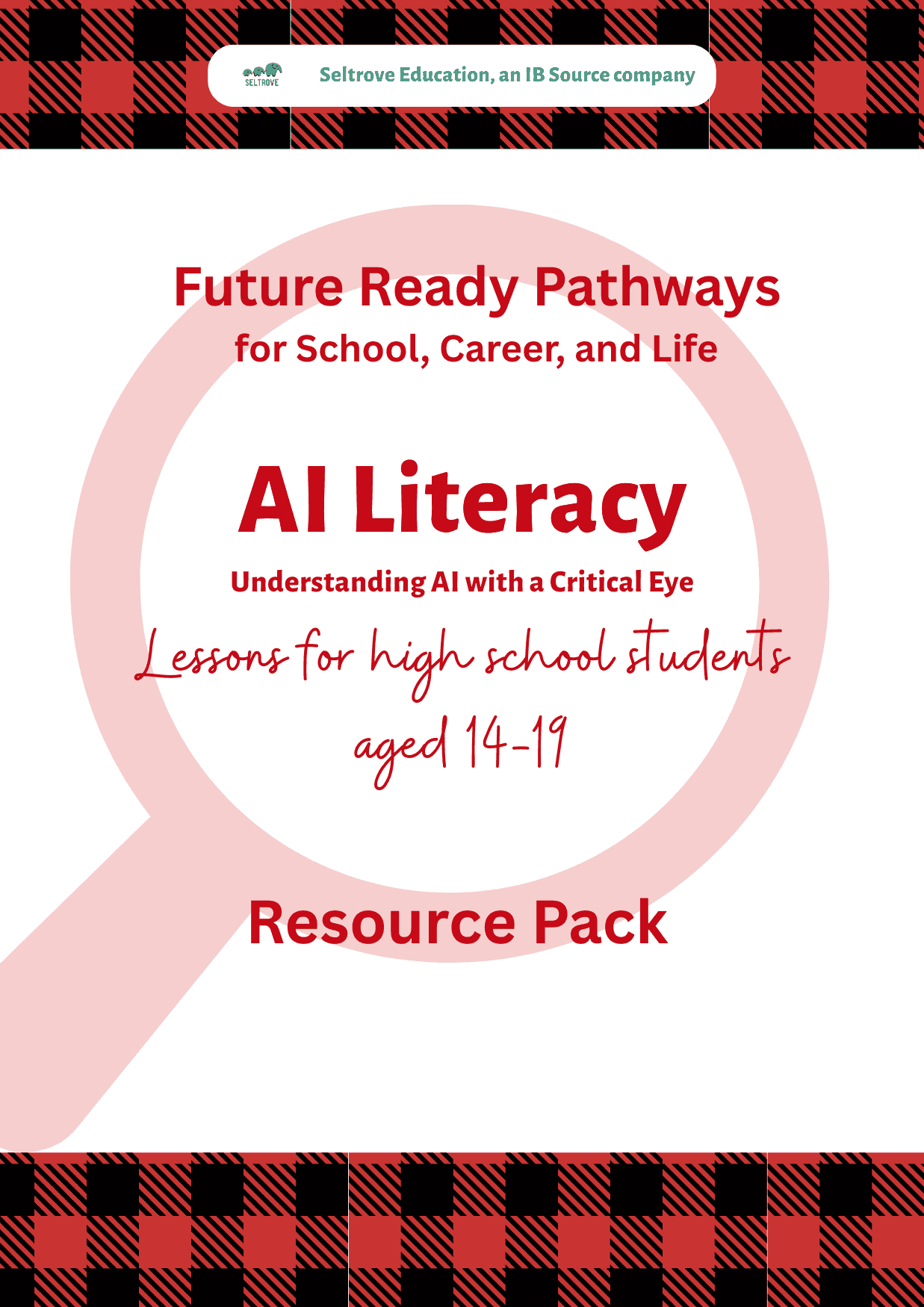
AI Literacy for High School: Teaching Teens to Navigate Artificial Intelligence
High school students are heavy users of AI-powered tools. Social media feeds are curated by algorithms. Generative AI writes essays and creates digital art. Predictive text finishes their messages. Yet while teens are skilled at using these tools, they often lack understanding of how they work or the ethical questions they raise.
At ages 14–18, students are preparing for college, careers, and civic life. AI literacy ensures they graduate not just as users of technology but as critical thinkers, responsible citizens, and ethical decision-makers.
Core Learning Goals
High school AI literacy should emphasize:
How AI works — machine learning, data, and algorithms.
Bias and fairness — understanding how algorithms can perpetuate stereotypes.
Ethical dilemmas — privacy, surveillance, misinformation, job automation.
Critical application — when and how to use AI responsibly in school and beyond.
Future readiness — preparing for careers where AI will be part of everyday work.
Teaching Strategies for AI Literacy in High School
1. Current Events and Case Studies
Teens connect strongly with real-world examples. Discuss news stories about:
AI in healthcare detecting diseases.
AI bias in hiring or policing.
Generative AI tools shaping art, writing, and media.
Analyzing pros and cons builds critical thinking.
2. Hands-On Exploration
Allow students to try AI tools in structured settings. Compare human writing with AI-generated text, or test how different prompts change results. Encourage them to question accuracy and bias.
3. Ethical Debates
Debates sharpen reasoning and expose diverse viewpoints. Ask:
Should AI replace certain jobs?
Who is responsible when AI makes a mistake?
Should governments regulate AI use?
4. Connect to SEL Skills
High schoolers benefit from linking AI literacy to self-awareness, empathy, and responsibility:
How does AI shape my identity online?
How does it affect how I see others?
How should I use AI tools without replacing my own effort or creativity?
5. Career Preparation
AI is reshaping every field. Students should explore how AI impacts industries like medicine, marketing, law, and education. This highlights the importance of skills AI cannot replace — creativity, collaboration, and critical thinking.
Challenges Teens Face
Teens may:
Over-rely on AI for assignments.
Assume AI is neutral and always correct.
Struggle with privacy risks when oversharing online.
AI literacy helps them balance using AI as a tool without becoming dependent on it.
Final Thoughts on AI Literacy for High School: Teaching Teens to Navigate Artificial Intelligence
AI literacy is not just for future engineers. Every teen needs to understand how AI influences society, relationships, and opportunities. By teaching high school students the technical basics, ethical dilemmas, and responsible applications of AI, schools prepare them to navigate adulthood in a world defined by technology.
Equipped with AI literacy, teens will be better prepared to make informed choices, challenge unfair systems, and thrive in careers where AI is the norm. Find out more at www.seltrove.com
AI Literacy – Understanding AI with a Critical Eye (High School) Teacher Resource Pack
$79.00
Downloadable & Printable Resource Pack for Teachers, Homeschools, and Parents Help your students navigate the rapidly evolving world of artificial intelligence with confidence and critical thinking.Designed for high school students (ages 15–19), this ready-to-use pack builds awareness of what AI… read more