
Table of Contents
- Deep Dive IBDP Physics: - PHY D.1 Gravitational Fields Teacher Resource Pack
- 🌀 Resource 1: Sketching Gravitational Field Lines
- ⚖️ Resource 2: Gravitational Potential Energy Investigation
- 📚 How These Activities Support IB Physics Objectives
- 🧲 Recommended Shopify SEO Tags
- 🌍 Help Students Grasp Gravity—From Theory to Application
Deep Dive IBDP Physics: - PHY D.1 Gravitational Fields Teacher Resource Pack
Understanding gravity is more than memorizing Newton’s Law—it's about seeing invisible forces and calculating the potential energy that governs planetary motion, satellite trajectories, and everyday phenomena. For educators teaching the IB Diploma Programme (IBDP) Physics, two essential concepts—gravitational field lines and gravitational potential energy—are foundational to the curriculum.
To support these learning outcomes, we present two classroom-ready resources:
Sketching Gravitational Field Lines
Gravitational Potential Energy Investigation
These hands-on, inquiry-based activities are aligned with IBDP Topic D.1: Gravitational Fields and give students a visual and analytical grasp of how mass shapes space and influences motion.
🌀 Resource 1: Sketching Gravitational Field Lines
Curriculum Alignment:
Topic D.1 – Gravitational Fields
Subtopics: Field strength, direction, visual representation of vector fields
What This Resource Covers:
Students explore how gravitational field lines depict the invisible force that attracts masses. Through collaborative sketching and analysis, they learn how to visualize and interpret field strength, direction, and equipotential surfaces.
Key Learning Objectives:
Understand characteristics of gravitational fields: lines point toward the mass and do not cross
Sketch field lines around a point mass and a uniform spherical mass
Interpret field line density as an indicator of gravitational strength
Label equipotential surfaces in relation to field lines
Activity Highlights:
Sketch gravitational fields around Earth and other spherical bodies
Use graphical tools or software to enhance visual understanding
Identify regions of strong vs. weak gravitational intensity
Present findings and justify reasoning to the class
Why It’s Effective:
Encourages students to move beyond equations and think visually
Reinforces the inverse-square law by examining line density
Supports spatial understanding and diagrammatic literacy
Stimulates class discussion and peer learning
Extend the Learning:
Simulate gravitational fields around binary star systems
Explore distortions near black holes
Connect field lines to concepts like gravitational potential wells.
⚖️ Resource 2: Gravitational Potential Energy Investigation
Curriculum Alignment:
Topic D.1 – Gravitational Potential Energy
Core Skills: Mathematical modeling, data analysis, graphing
What This Resource Covers:
This investigation takes a deeper dive into the relationship between gravitational potential energy (GPE) and distance from a mass, guiding students through real-world calculations and graphing to enhance conceptual understanding.
Key Learning Objectives:
Apply the formula:
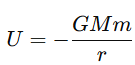
where UU is gravitational potential energy, GG is the gravitational constant, MM and mm are the masses, and rr is the distance from the center of the celestial body
Calculate GPE for varying distances from Earth or the Moon
Graph GPE vs. distance and analyze trends
Understand why GPE is always negative in gravitational fields
Step-by-Step Learning:
Choose a celestial body and define object mass
Calculate GPE at distances from RR to (e.g., Earth's radius to 3× Earth's radius)
Plot the energy values and interpret the inverse relationship
Discuss why energy becomes less negative with distance and its implications
Why Educators Love It:
Promotes real-life application of physics equations
Builds data literacy through graphing and interpretation
Reinforces the concept of work done against gravity
Connects to topics like satellite motion and escape velocity
Extend the Learning:
Apply GPE to satellite orbits and orbital energy balances
Model gravitational energy on other planets for comparison
Explore total mechanical energy in gravitational systems.
📚 How These Activities Support IB Physics Objectives
Both resources deliver rich, engaging learning experiences that fulfill the IBDP’s expectations for conceptual understanding, practical application, and critical thinking.
Skills Reinforced:
Visual modeling (field line sketching)
Equation application and algebraic manipulation
Graphing and interpreting real-world data
Peer collaboration and class discussion
Scientific presentation skills
Internal Assessment (IA) Potential:
Investigate how field line density changes with mass or distance
Model gravitational energy changes for hypothetical orbits
Analyze equipotential surface spacing and derive field strength patterns
Explore how gravitational potential relates to satellite design or interplanetary travel
🧲 Recommended Shopify SEO Tags
Enhance your reach and visibility using relevant, high-impact tags:
IBDP gravitational field diagram activity
Gravitational potential energy vs. distance graph
Sketching gravitational field lines for physics class
Equipotential surface and gravitational field strength
Negative gravitational energy in orbital motion
Inverse-square law classroom activity
Celestial body gravitational modeling worksheet
Satellite GPE analysis IB physics
🌍 Help Students Grasp Gravity—From Theory to Application
These classroom-ready resources transform gravitational theory into something students can see, calculate, and internalize. With field diagrams and GPE calculations in hand, learners will deepen their understanding of how mass curves space, attracts objects, and governs celestial motion.
By adding these activities to your IB Physics repertoire, you give your students more than formulas—you give them the tools to visualize forces and quantify energy in the universe.
👉 Start using these proven, standards-aligned lessons today and help students feel the pull of physics—literally.