
Table of Contents
Deep Dive IBDP Physics: - E.4 Fission Teacher Resource Pack
The peaceful use of nuclear energy is one of the greatest scientific accomplishments of our time—but it also demands critical understanding and careful stewardship. For educators teaching the International Baccalaureate Diploma Programme (IBDP) Physics, the topics of nuclear fission, neutron behavior, and nuclear waste management offer both scientific depth and real-world relevance.
To empower teachers and engage students, we offer two robust classroom resources:
The Role of Neutrons in Fission Reactions
Understanding the Nuclear Fuel Cycle and Waste Management
These resources combine theoretical rigor, quantitative reasoning, and ethical reflection, helping students appreciate not just how nuclear power works, but why its management matters.
🔬 The Role of Neutrons in Fission Reactions
IBDP Curriculum Link:
Topic E.4: Nuclear Fission and Energy Production
This activity focuses on the critical function of neutrons in initiating and sustaining chain reactions within a nuclear reactor. Students will explore neutron multiplication, neutron flux, and the impact of absorption and moderation on reaction sustainability.
Key Learning Objectives:
Calculate the neutron multiplication factor (k) and determine its effect on chain reaction growth
Model the exponential growth of neutrons across multiple generations
Understand the role of moderators and control rods in maintaining safe reactor operations
Analyze how neutron energy and flux impact reactor efficiency
Equations and Concepts:
Neutron multiplication over generations:
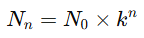
Where N0N_0 is the initial number of neutrons, kk is the multiplication factor, and nn is the number of generations
Impact of changing kk:
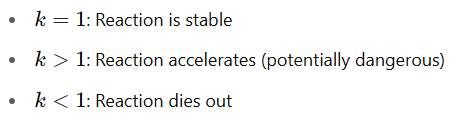
Hands-On Activities:
Model neutron chain reactions with
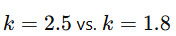
Analyze how neutron absorption by control rods or reactor walls impacts neutron availability
Reflect on how design changes affect neutron sustainability in a fission reactor
Why Educators Love It:
Sharpens mathematical modeling and systems thinking
Connects nuclear theory to real reactor operations
Encourages discussion of safety and control mechanisms in modern energy systems.
♻ Understanding the Nuclear Fuel Cycle and Waste Management
IBDP Curriculum Link:
Topic E.4: Nuclear Fuel Cycle and Waste Disposal
Energy Production and Environmental Impact
This resource takes students on a journey through the entire life cycle of nuclear fuel, from mining and enrichment to reprocessing and waste storage. It invites students to investigate radioactive decay, half-life calculations, and the ethical challenges of long-term radioactive waste management.
Key Learning Objectives:
Explore each step of the nuclear fuel cycle
Distinguish between high-level and low-level radioactive waste
Use decay equations to estimate how long isotopes remain hazardous
Assess real-world disposal methods like geological burial and reprocessing
Core Equations and Practice:
Radioactive Decay:
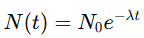
Decay Constant from Half-Life:

Apply to isotopes like plutonium-239 (half-life: 24,100 years) to calculate:
Time until only 1% remains
Amount remaining after 100,000 years
Real-World Relevance:
Examine plutonium and uranium decay profiles
Model long-term waste behavior in different storage conditions
Debate ethical questions: Who bears responsibility for future generations?
Activity Highlights:
Use half-life data to model decay over time
Explore scenarios for deep geological disposal vs. reprocessing
Extend learning by researching emerging waste-reduction technologies
SEO Keywords: nuclear waste decay calculation, IBDP nuclear fuel cycle activity, radioactive waste half-life worksheet, plutonium-239 decay model, nuclear ethics and waste management resource.
Why These Resources Matter for IB Physics Classrooms
✏ Skill Development:
Sharpens numerical fluency through decay modeling and chain reaction equations
Encourages data interpretation and graphing for radioactive decay curves
Fosters ethical reasoning and interdisciplinary connections
🌍 Real-World Application:
Ties physics learning directly to pressing global issues: sustainability, nuclear energy policy, public safety, and environmental impact
Supports students preparing for Internal Assessments and extended essays
Aligns with IB's aim to create globally conscious scientists
🧪 Internal Assessment (IA) Ideas:
Investigate how changes in kk influence neutron output in simulated reactors
Compare the effectiveness of different moderators in sustaining fission
Model the decay of nuclear waste in a storage scenario and evaluate safety over time
Explore trade-offs between reprocessing and permanent storage.
🚀 Equip Students with the Knowledge to Power the Future
Understanding nuclear energy is about more than splitting atoms—it's about balancing science, safety, and sustainability. These two IBDP Physics resources provide educators with everything they need to explore the scientific fundamentals and ethical complexities of nuclear power.
Whether you're preparing students for exams, IA projects, or a deeper awareness of our energy future, these lessons will help you:
Make nuclear physics accessible and engaging
Strengthen students' scientific reasoning and critical thinking
Foster reflection on the societal and environmental implications of nuclear technology
👉 Add these must-have resources to your IBDP Physics collection and spark powerful conversations in your classroom today.