
Table of Contents
- Deep Dive IBDP Physics: - E.1 Structure of the Atom Teacher Resources Pack
- 📉 Activity 1: Investigating the Impact of Scattering Angles on Energy Loss
- ⚛️ Activity 2: Exploring the Effects of Energy on Scattering Angles
- 🧠 Critical Thinking and Real-World Connections
- 🔬 Empower Students to See the Invisible
Deep Dive IBDP Physics: - E.1 Structure of the Atom Teacher Resources Pack
In the heart of the atom lies a story of deflection, force, and revelation. Rutherford's scattering experiment redefined atomic structure and remains one of the most critical topics in modern physics education. For International Baccalaureate Diploma Programme (IBDP) Physics educators, this concept is foundational—and teaching it well means combining data analysis, simulation, and theoretical depth.
We’re excited to introduce two high-impact, classroom-ready resources to support this goal:
Investigating the Impact of Scattering Angles on Energy Loss
Exploring the Effects of Energy on Scattering Angles
Each resource is aligned with key areas of the IBDP curriculum, including atomic structure, forces and fields, and energy conservation. Together, they offer a comprehensive, hands-on approach to Rutherford scattering, giving your students the tools to explore physics at the subatomic scale.
📉 Activity 1: Investigating the Impact of Scattering Angles on Energy Loss
IBDP Physics Alignment:
Topic 3: Atomic, Nuclear, and Particle Physics
Topic 4: Forces and Fields
Topic 8: Energy Production
Learning Goals:
Explore how scattering angles influence energy loss in alpha particles
Analyze energy transfer during nuclear interactions
Apply energy conservation principles to real-world scattering scenarios
Core Concepts:
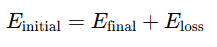
This activity revolves around the principle that larger scattering angles indicate a closer approach to the nucleus, resulting in a greater energy transfer. Using simulations, students explore how deflection changes the kinetic energy of alpha particles as they interact with the nucleus.
Highlights of the Resource:
Simulated scattering of alpha particles at different angles
Data collection for energy loss versus scattering angle
Graphing and interpreting the nonlinear relationship between deflection and energy loss
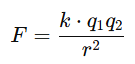
Application of Coulomb's Law to justify the observed outcomes
Equations in Focus:
Energy conservation:
Coulomb force relationship:
Scattering angle as a function of distance and force
Classroom Impact:
Fosters numerical literacy and graphing skills
Encourages conceptual understanding of electrostatic interactions
Builds a strong foundation for more complex nuclear energy discussions
Supports IA prep by introducing energy quantification techniques.
⚛️ Activity 2: Exploring the Effects of Energy on Scattering Angles
IBDP Physics Alignment:
Topic 3: Atomic, Nuclear, and Particle Physics
Topic 4: Forces and Fields
Topic 8: Energy Production
Learning Goals:
Understand how increased alpha particle energy results in smaller scattering angles
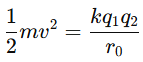
Calculate the distance of closest approach using energy conservation principles
Model and visualize Coulomb interactions in a Rutherford setup
Conceptual Focus:
Unlike the first activity, this one inverts the relationship: students adjust the energy of the incoming particles and observe how it alters the scattering angle. The inverse nature of this relationship reveals the subtle balance between particle energy and electrostatic repulsion.
Activity Features:
Use of online simulations to manipulate incident alpha particle energy
Observation and measurement of resulting scattering angles
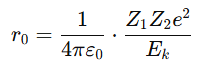
Calculation of closest approach distance from energy data
Development of a graph showing the inverse relationship between energy and angle
Equations in Focus:
Distance of closest approach:
Scattering angle correlation:

Conservation of energy:
Why Educators Value It:
Provides a visual, kinesthetic understanding of atomic behavior
Bridges the gap between classical mechanics and atomic theory
Enables students to model real experimental data with modern tools
Encourages hypothesis testing and trend analysis.
🧠 Critical Thinking and Real-World Connections
These resources offer more than just content coverage—they equip students with the tools to critically analyze particle interactions using:
Data interpretation and trend analysis
Conceptual reasoning through simulations
Mathematical modeling of physical phenomena
Suggested IB Internal Assessment (IA) Topics:
Investigating how energy of alpha particles affects the angle of deflection in Rutherford scattering
Analyzing the impact of different target nuclei on scattering outcomes
Modeling the energy loss of particles at varying scattering angles using simulation data
Extended Learning Opportunities:
Compare classical predictions with quantum scattering effects
Investigate cross-section probability and its relevance in nuclear physics
Explore real-world applications like particle accelerators and medical imaging.
🔬 Empower Students to See the Invisible
By engaging with Rutherford scattering through both energy analysis and angle measurement, students don't just memorize theory—they internalize it. These resources provide a gateway into the world of atomic structure, bridging classical and quantum realms through vivid experiments, math-driven insights, and data-backed exploration.
Whether you're launching a unit on nuclear physics or preparing students for assessments, these ready-to-use activities bring one of physics’ greatest experiments to life.
👉 Add these high-impact resources to your IBDP Physics toolkit and help your students see the atom not as a mystery, but as a model they can explore, test, and understand.