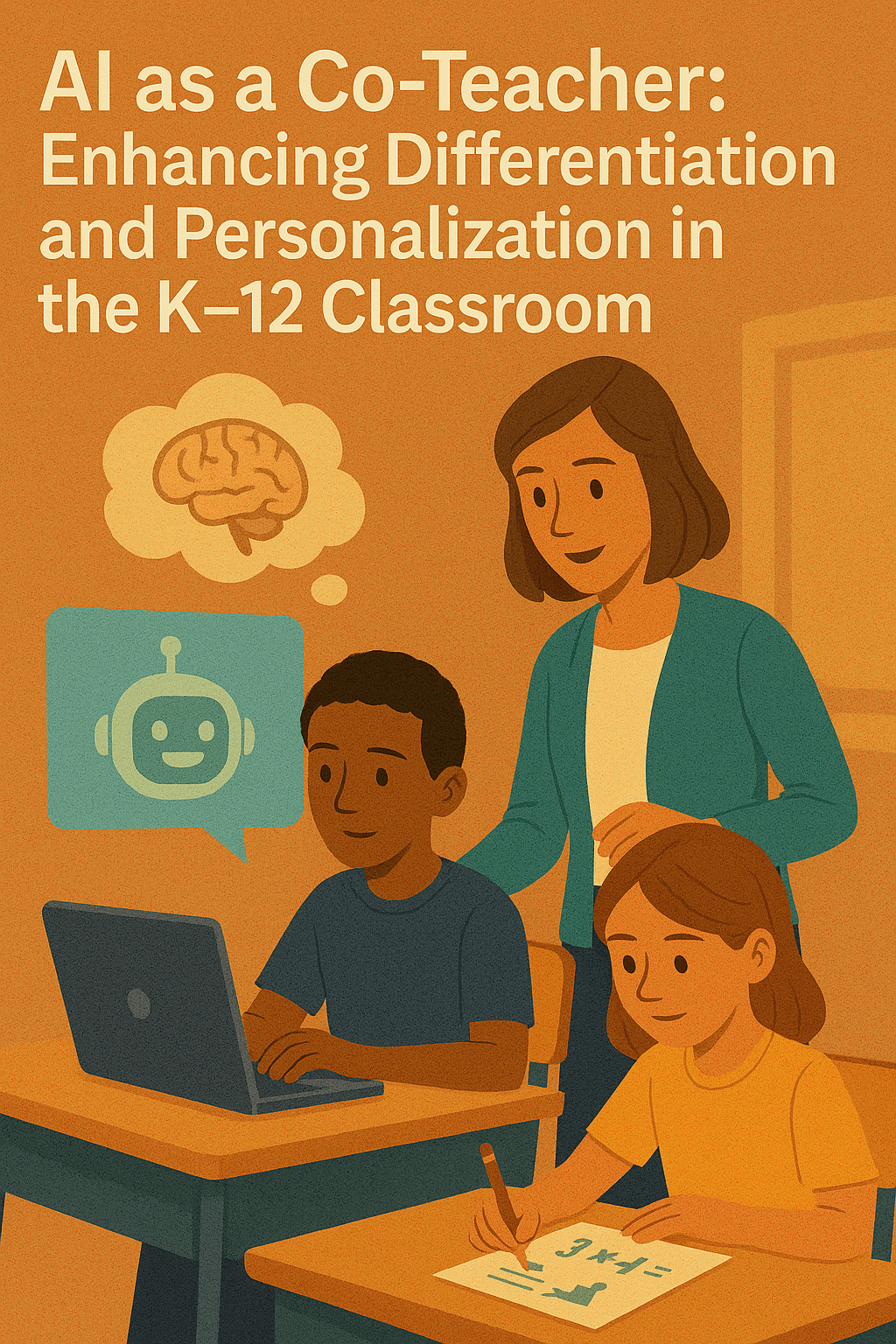
AI as a Co-Teacher - As artificial intelligence (AI) tools make their way into classrooms, one of their most promising roles is that of a co-teacher—supporting personalized learning with AI, differentiating instruction, and freeing educators to do what they do best: connect with students. But with this promise comes a set of challenges that must be addressed with clarity, care, and a commitment to educational equity.
The Promise of Personalization
At its core, AI in K–12 education enables teachers to tailor educational experiences to individual students more efficiently than ever before. Tools like Khanmigo, ChatGPT, and Diffit can help generate leveled reading passages, custom math problems, or even language supports based on a student’s ability, interest, or language background.
For example, a teacher can input a grade-level text into a GenAI tool and request simplified versions for students reading below grade level—or request an enrichment version for advanced learners. Similarly, AI can create real-time quizzes, scaffolded questions, and adaptive explanations based on student responses.
In this way, AI acts as an instructional assistant, accelerating the preparation of differentiated materials and enabling more responsive, inclusive instruction.
As the International Society for Technology in Education (ISTE) notes, AI tools and AI as a Co-Teacher “can help educators personalize learning in ways that were previously impractical due to time and resource constraints” (ISTE, 2023).
Human + AI, Not Human vs. AI
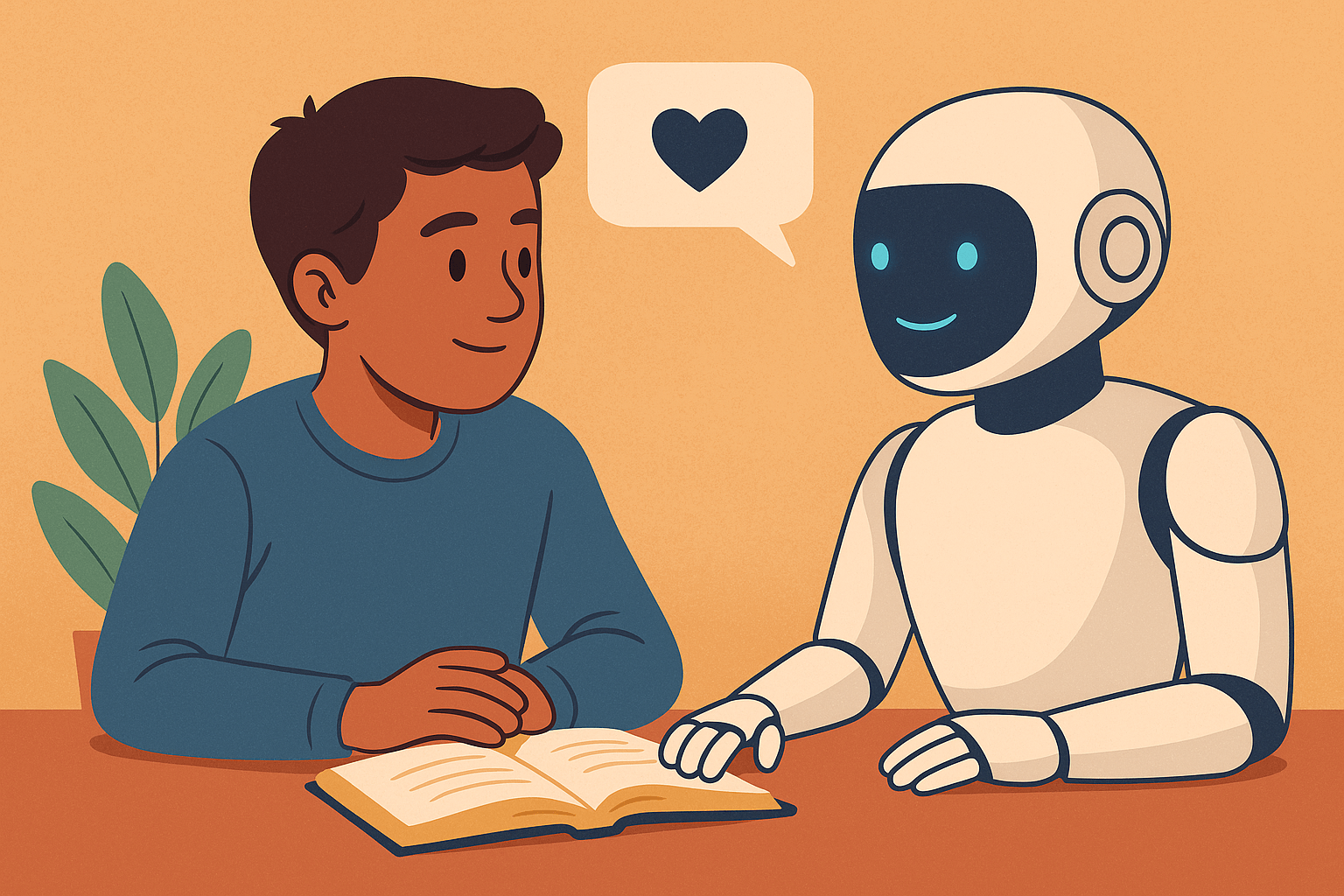
The best use of GenAI in the classroom isn’t to replace teachers—it’s to enhance their capacity. AI can handle repetitive or administrative tasks (like generating rubrics or converting documents into different formats), freeing teachers to focus on relationship-building, formative assessment, and deeper instructional design.
The Brookings Institution emphasizes that GenAI “should be positioned to support—not supplant—teachers,” and cautions against using AI to simply automate low-quality instruction (Brookings, 2023).
Used well, AI as a co-teacher helps scaffold student learning and expands teacher bandwidth. Used poorly, it can erode pedagogical quality and human connection.
Where the Pitfalls Begin
Despite the promise, several challenges must be addressed before we declare AI a win for personalization.
1. Output Quality and Accuracy
AI tools often generate content that sounds correct but isn’t. “Hallucinations”—plausible-sounding but factually incorrect information—are common. Teachers must review outputs before using them.
2. Bias and Representation
AI tools reflect the data on which they’re trained. This means historical biases—whether in language, representation, or cultural perspective—can appear in generated content.
3. Equity of Access
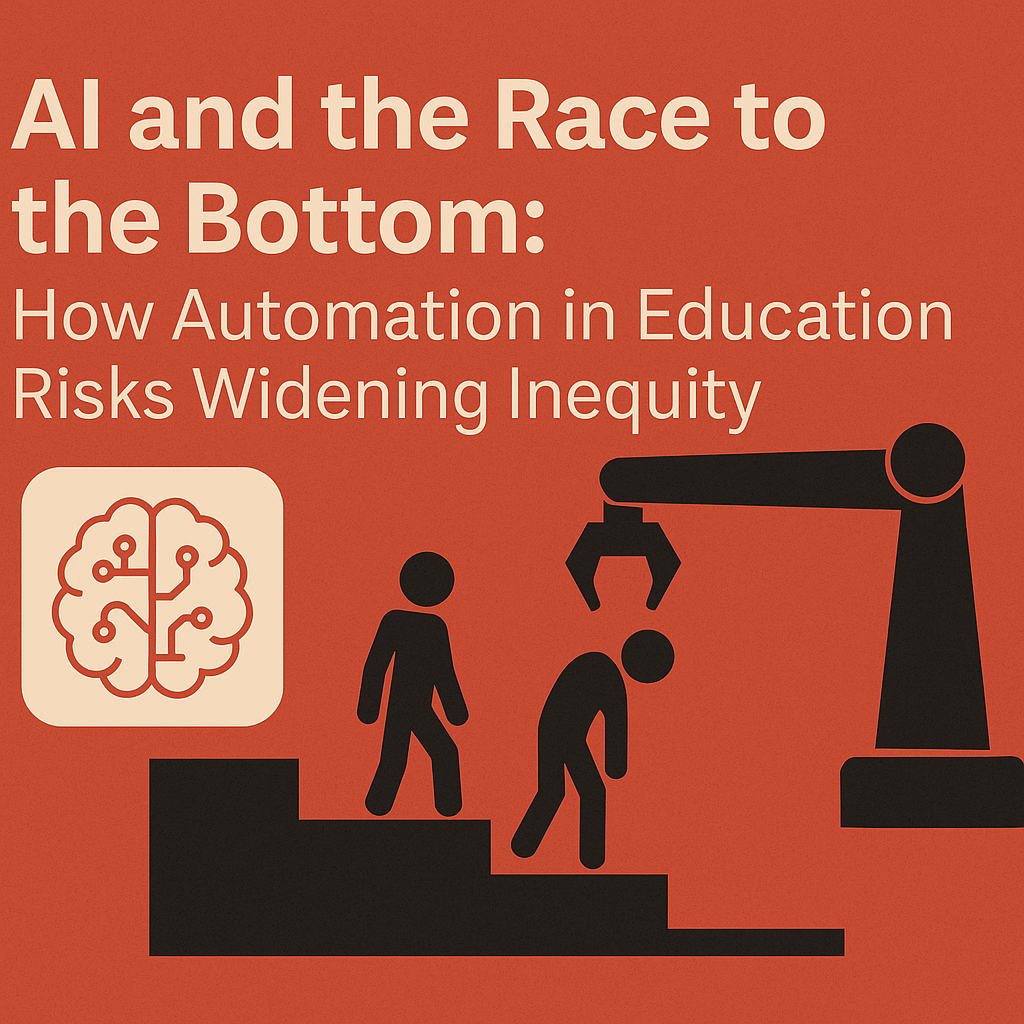
Not all schools have equal access to high-quality AI tools or devices. Without equitable implementation, AI in K–12 education could widen existing gaps.
4. Student Over-Reliance
If students use AI too heavily, they may bypass the cognitive struggle that leads to lasting learning. GenAI should support—not replace—thinking.
A recent Brookings survey found that only 16% of students experienced more 1:1 time with teachers after AI integration, while 15% experienced less—highlighting uneven outcomes.
What Educators Need Now
To truly realize the potential of personalized learning with AI, three things are needed:
✅ Professional Learning – Teachers must be trained not just in using AI tools, but in evaluating and integrating them thoughtfully.
✅ Clear Policy Guidance – Districts need clear AI usage guidelines
✅ Teacher Voice in Design – AI tools should be co-designed with teachers to align with instructional realities.
Conclusion: The Future is Collaborative
AI in K–12 education should not be viewed as a tech trend—but as a pedagogical shift. Teachers are and will remain the heart of learning. AI, when used as a co-teacher, can enhance personalization, support equity, and increase educator capacity.
But only when guided by thoughtful implementation, educator leadership, and a commitment to deep learning—not shortcuts. Find out more at www.myibsource.com