Table of Contents
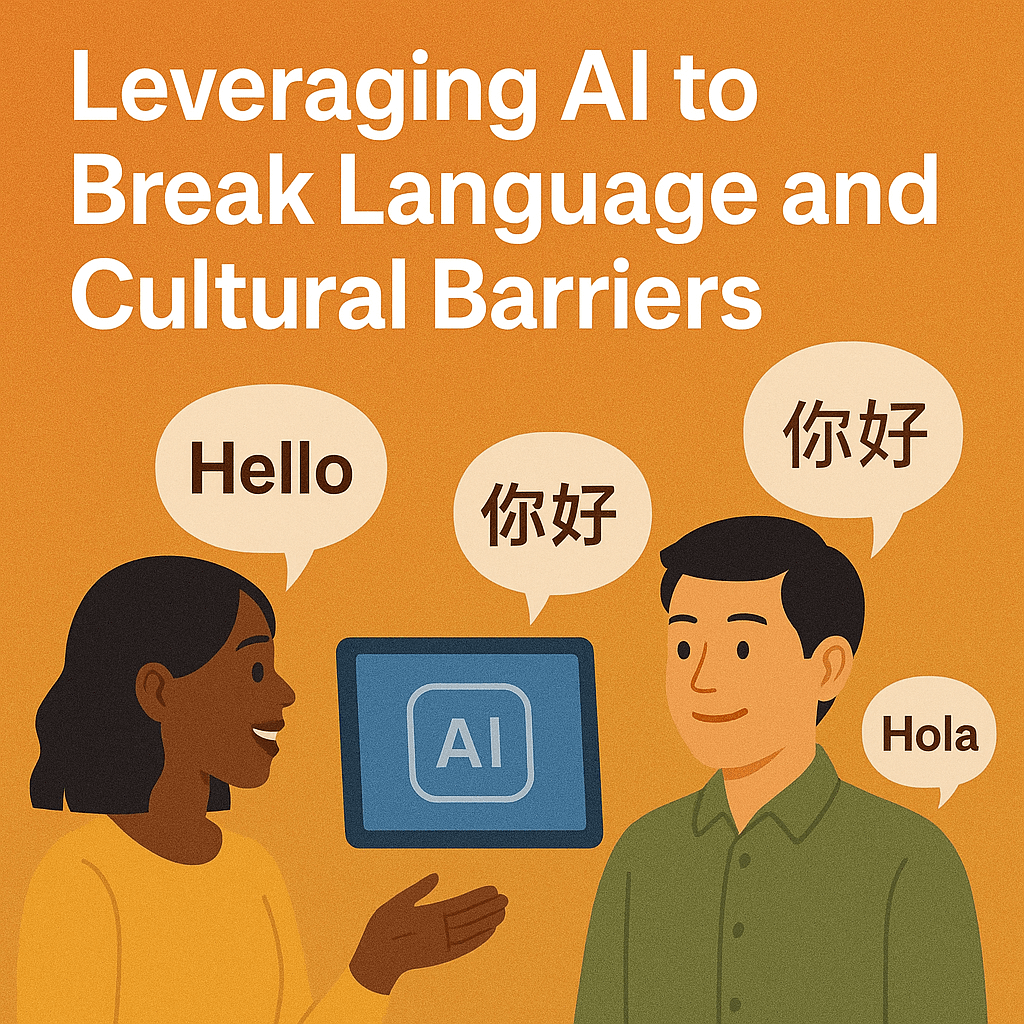
Leveraging AI to Break Language and Cultural Barriers - Social-emotional learning (SEL) is essential for developing empathy, resilience, and collaboration in today’s classrooms. But SEL can only be effective if all students see themselves reflected and respected in its materials and delivery. For multilingual, immigrant, and culturally diverse learners, SEL programs too often fall short—limited by language barriers and cultural blind spots.
This is where inclusive SEL with AI offers new promise. Generative AI and natural language processing (NLP) tools can help schools bridge linguistic and cultural gaps, ensuring every learner has the opportunity to develop social-emotional competencies in a way that resonates with their lived experience.
In this article, Leveraging AI to Break Language and Cultural Barriers, we explore how AI can promote language and cultural inclusion in SEL, its transformative potential, and the risks educators need to navigate thoughtfully.
The Challenge: SEL’s Equity Gap
According to the Migration Policy Institute, nearly 25% of students in U.S. public schools come from immigrant families, and over 5 million are English Language Learners (ELLs). Yet, many SEL resources:
Are designed only in English,
Reflect Western cultural norms,
Lack context for students from diverse cultural backgrounds.
This creates inequities in SEL delivery and can leave marginalized students feeling excluded from the emotional curriculum that is meant to empower them.
How AI Enhances Language and Cultural Inclusion
🌎 1. Multilingual Translation
Advanced AI-powered translation tools—like Google Translate AI, DeepL, and custom NLP applications—can:
Translate SEL content into multiple languages instantly,
Retain cultural nuance more effectively than earlier translation models,
Allow real-time communication between teachers, students, and families.
For example, a reflective journaling prompt like:
“Describe a time you showed courage.”
Can be instantly translated into students’ home languages—helping them express emotions and experiences without language barriers.
🤝 2. Cultural Contextualization
Generative AI can adapt scenarios and examples to reflect students' cultural realities. For instance:
Instead of discussing Thanksgiving (which may not resonate globally), AI can swap in local festivals or traditions when prompting reflections on community and gratitude.
Conflict resolution scenarios can be tailored to reflect cultural communication styles—whether direct or indirect.
🧩 3. Accessibility and Differentiation
AI can adjust SEL content based on:
Reading levels,
Sensory needs,
Preferred learning formats (visual, auditory, text).
This ensures inclusion for neurodiverse learners and students with disabilities.
💬 4. Family Engagement
AI-driven translation and summarization tools help bridge the home-school connection, allowing non-English-speaking families to engage with:
SEL curriculum outlines,
Progress reports,
School wellness initiatives.
This strengthens the community-wide embrace of SEL.
Benefits of Inclusive SEL with AI
✅ Language Equity
AI allows ELL students to fully participate in SEL programs from day one, supporting both emotional growth and language development.
✅ Cultural Relevance
By integrating culturally meaningful content, AI fosters greater engagement, trust, and resonance. Students feel seen, respected, and included.
✅ Fosters Empathy Across Differences
Exposing all students to culturally diverse SEL content promotes global empathy and intercultural competence—skills that are essential in an interconnected world.
✅ Boosts Academic Success
Research shows that inclusive SEL improves not only emotional well-being but also academic outcomes (CASEL, 2021).
Pitfalls and Ethical Considerations
🚩 1. Translation Limitations
While AI translation has advanced, it’s not foolproof. Misinterpretations or loss of nuance can distort SEL meanings—particularly around emotions, which are culturally mediated.
🚩 2. Cultural Simplification or Stereotyping
AI tools must avoid essentializing cultures. Without careful oversight, prompts may reduce rich cultural contexts to clichés, undermining inclusion rather than enhancing it.
As the Brookings Institution warns, AI in education must be continually audited for cultural bias and accuracy (Brookings AI in Education, 2023).
🚩 3. Privacy Concerns
Translation and personalization involve processing sensitive student data. Schools must ensure platforms comply with FERPA, COPPA, and local privacy regulations, and avoid storing unnecessary personal information.
🚩 4. Over-Automation Risk
Relying too heavily on AI risks minimizing human relationships, which are central to authentic SEL. Tools should support, not replace, live dialogue and cultural exchange.
Best Practices for Ethical Implementation
✅ 1. Human Review Always
Translations and culturally adapted scenarios should be reviewed by educators and, where possible, community stakeholders to ensure appropriateness and respect.
✅ 2. Celebrate Student Input
Invite students to co-create SEL materials, sharing culturally significant practices and emotional expressions that can enrich the curriculum.
✅ 3. Train Educators on Cultural Competence
Equip teachers with cultural humility and AI literacy to understand both the power and limits of AI-enhanced SEL.
✅ 4. Build Community Partnerships
Work with local cultural organizations to vet and enhance AI-driven SEL resources—grounding digital tools in lived realities.
Global Success Stories
Finland’s Inclusive Schools Initiative piloted AI translation in SEL, helping integrate refugee students with high engagement and positive feedback.
Toronto’s Multilingual SEL Project used AI to deliver tailored SEL modules in six languages, resulting in a 40% increase in ELL student participation.
The OECD’s Future of Education and Skills report underscores that AI-enabled cultural inclusion is key to building equitable, future-ready education systems (OECD, 2023).
Conclusion: Bridging Divides, Building Belonging
Inclusion is at the heart of meaningful SEL. Inclusive SEL with AI offers powerful ways to break down language and cultural barriers, ensuring that every student—regardless of background—can build the emotional skills they need to thrive.
But as we harness these tools, we must stay grounded in human connection, cultural humility, and ethical responsibility. AI can open doors, but true belonging comes from relationships—teacher to student, peer to peer, and community to school.
By blending AI’s power with authentic human care, we can create classrooms where every voice is heard, every culture is honored, and every student is empowered to flourish. Find out more at www.myibsource.com
Leveraging AI to Break Language and Cultural Barriers
SEL Lightspeed Schoolwide Digital Solution (1-year subscription)
$1,999.00
The subscription for Seltrove Lightspeed, a web-based social-emotional learning (SEL) program for K-12 students, includes various tools and resources to enhance student education and teacher professional development. Here's a detailed overview of what's included, now including turnkey teacher lesson presentations:… read more