Avoiding the AI Trap: Why Better Output Doesn’t Always Mean Better Thinking - We’re living in a moment of rapid AI adoption in education. Tools like ChatGPT, Microsoft Copilot, and Perplexity are producing writing, solving math problems, and summarizing texts at lightning speed. But as we marvel at the outputs, educators need to ask a more fundamental question: Is anyone still thinking?
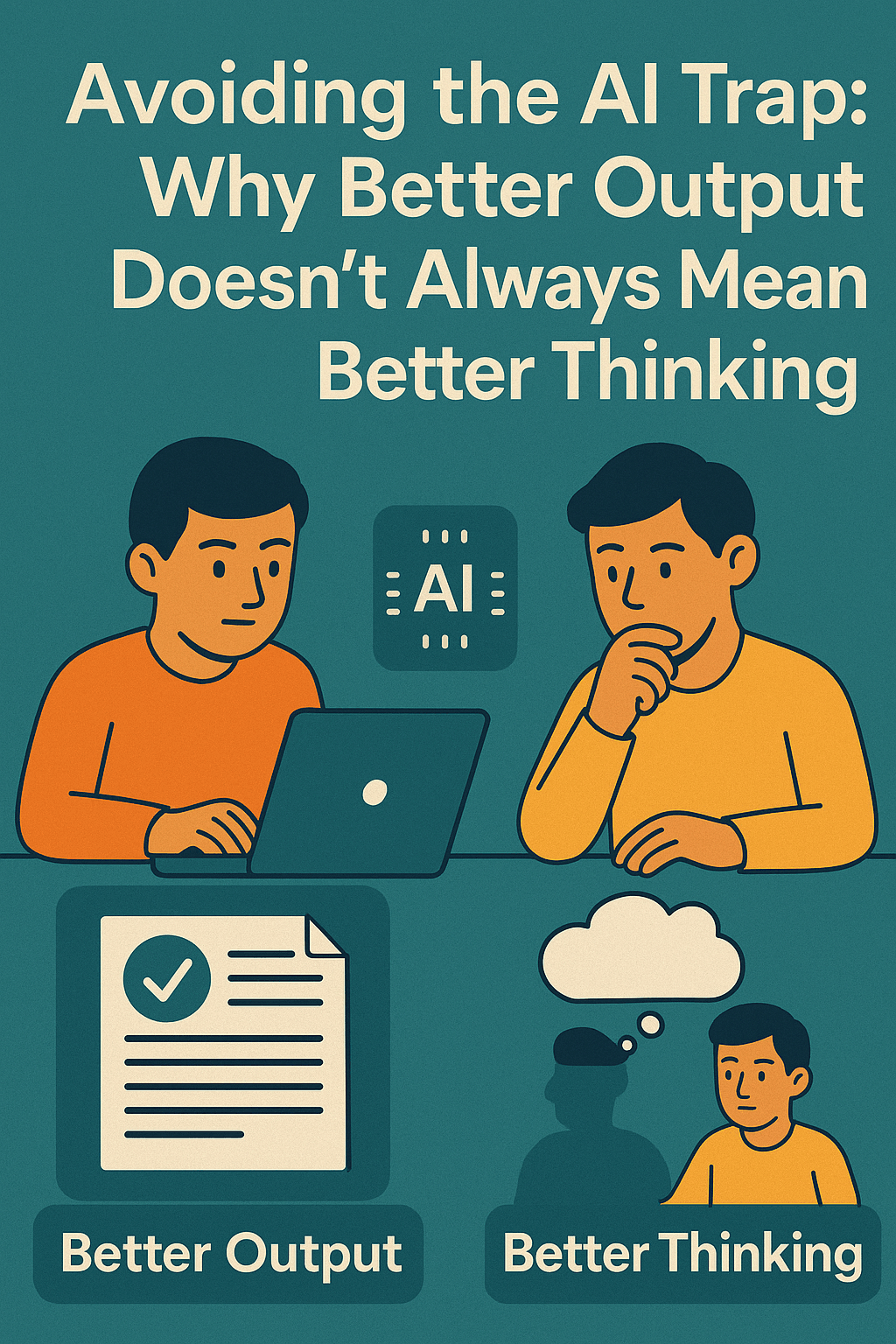
In our race to embrace generative AI, we risk conflating polished products with meaningful learning. This is the AI trap—where better output is mistaken for better thinking. And it’s becoming one of the most urgent issues in education.
The Cognitive Offloading Dilemma
Cognitive offloading is a well-documented psychological process where we use tools or systems to reduce our mental effort. Writing something down, for example, is a form of offloading memory. In moderation, it helps us focus and manage complexity. But when overused—especially with AI—it can dull critical thinking and erode learning.
A study by Microsoft and Carnegie Mellon found that AI tools can significantly reduce users’ analytical performance when people rely on AI-generated answers without verification (Microsoft/CMU Study, 2023).
Anthropic’s large-scale research on AI in higher education reached similar conclusions: students using AI for tasks like data analysis and textual interpretation showed diminished engagement and struggled to articulate underlying reasoning when asked to explain their answers.
In other words: the more students use AI to solve problems, the less they may understand how those problems were solved.......Avoiding the AI Trap: Why Better Output Doesn’t Always Mean Better Thinking
Why This Matters for K–12 Classrooms
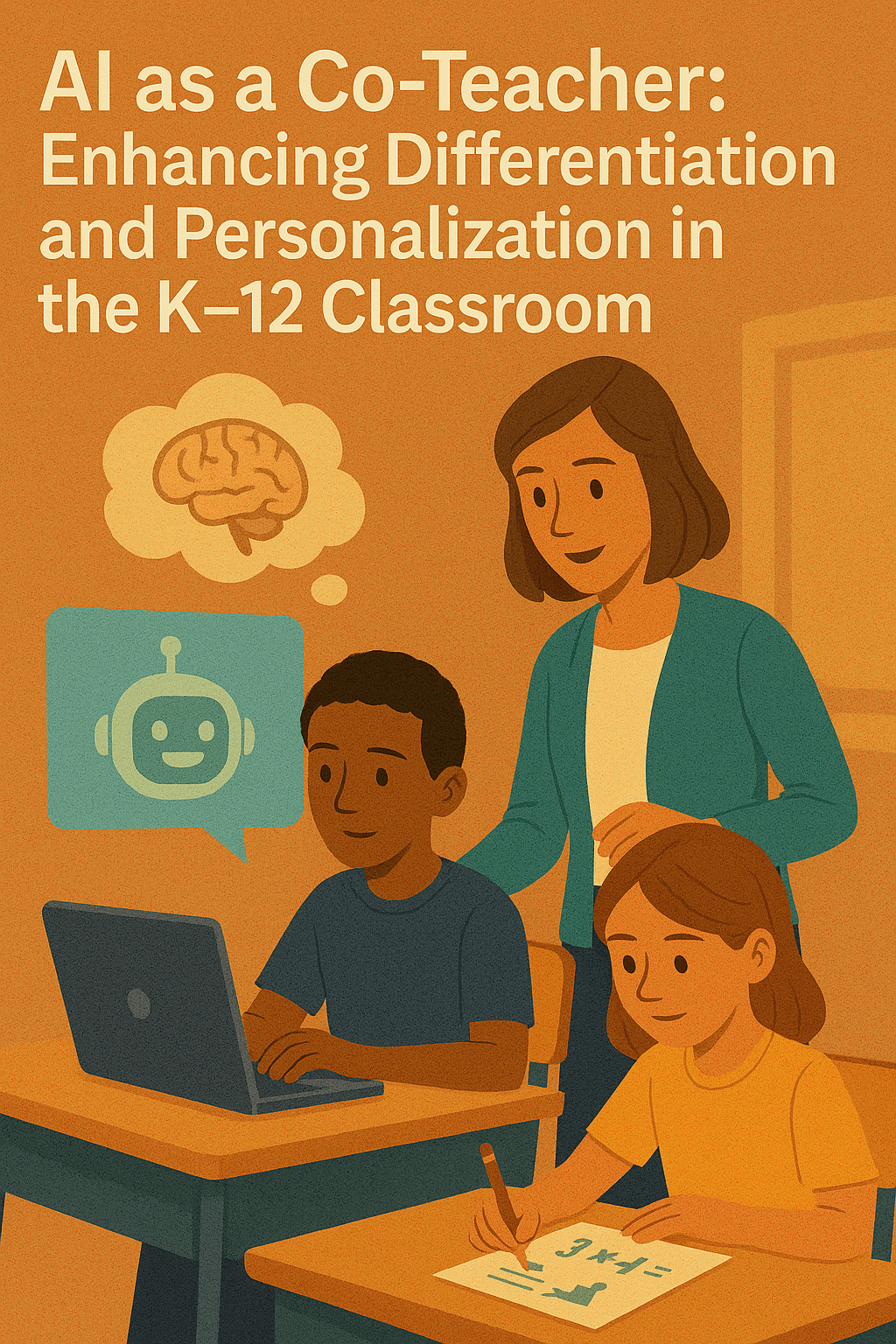
In K–12 settings, where foundational thinking habits are still forming, this trend is especially concerning. As students get used to AI tools completing tasks for them, the productive struggle—the mental workout that builds comprehension, creativity, and cognitive stamina—is replaced by surface-level efficiency.
This isn’t just a pedagogy problem—it’s a developmental one. Students who don’t build deep reasoning skills in school are less likely to thrive in future roles that require judgment, abstraction, and ethical decision-making.
Warning Signs in the Classroom
Some signs that your students may be falling into the AI trap include:
Submitting work that’s technically correct but lacks personal insight or voice.
Struggling to explain or defend their answers when questioned.
Skipping planning, outlining, or revision steps in writing.
Relying on AI-generated feedback without evaluating it.
These aren’t just issues of academic integrity—they signal a deeper disengagement from the learning process itself.
How to Protect Critical Thinking in the Age of AI
💡 1. Design for Process, Not Just Product
Shift assignments to emphasize how students arrive at their answers. Require outlines, drafts, annotations, or metacognitive reflections. Let them show their thinking.
Example: Instead of asking for a finished essay, have students submit their prompt design, AI output, critique of the output, and final revision.
📚 2. Incorporate Explainability Tasks
Ask students to explain or teach a concept back to you, even if they used AI during the process. The act of explanation reveals depth of understanding—or lack thereof.
🔍 3. Use AI as a Mirror, Not a Crutch
Encourage students to use AI tools as thought partners—generating opposing viewpoints, refining arguments, or simulating peer feedback—not as replacement engines.
Example: Use ChatGPT to generate a counterargument and ask students to rebut it.
🧠 4. Reinforce Intellectual Grit
Normalize the struggle. Make it clear that real learning often feels messy, slow, and challenging. AI should support clarity—not shortcut the journey.
The Role of Educators: Modeling and Messaging
Teachers play a crucial role in setting expectations. When students see teachers embracing AI cautiously, modeling reflective use, and valuing process over performance, they begin to adopt those habits too.
It’s also essential to discuss why we resist the AI trap: not to police behavior, but to preserve the joy of figuring something out, the satisfaction of crafting an original insight, and the confidence that comes from solving problems on your own.
Reclaiming Deep Learning
The allure of polished AI output is real. It’s easy to assume that if the result looks good, the learning must be good too. But in truth, the most valuable outcomes in education are often invisible—curiosity, persistence, clarity of thought.
AI can be part of the learning process. But it must be framed, guided, and challenged. Otherwise, we risk raising a generation of students who are better at asking machines for answers than asking questions of their own.
Conclusion: Depth Over Dazzle
In the age of AI, we must double down on what makes education meaningful: the messy, uncertain, and deeply human act of thinking. By designing assignments that foreground process, promoting reflection, and coaching students on when and how to engage AI, we can avoid the trap of shallow learning masked by sleek output.
It’s not about rejecting AI. It’s about reclaiming learning. Find out more at www.myibsource.com