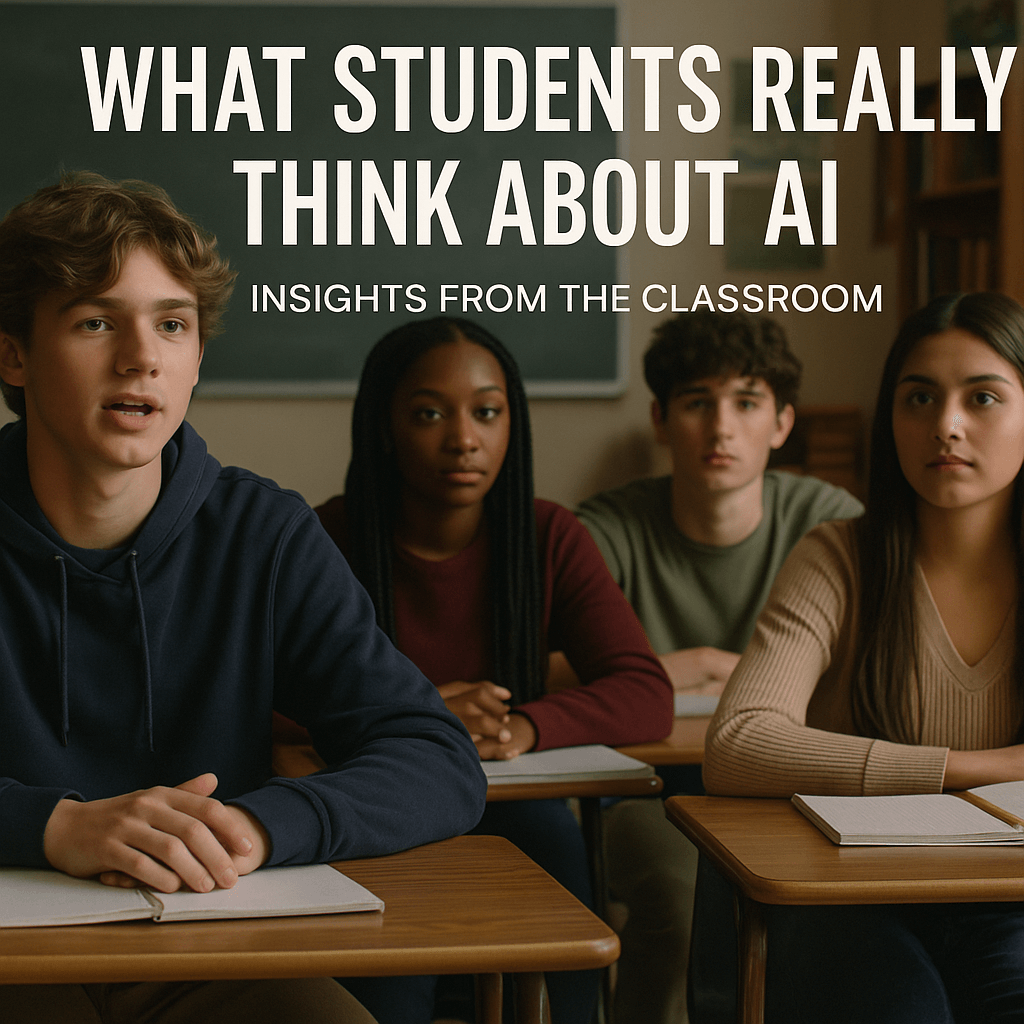
What Students Really Think About AI: Insights from the Classroom - In the rapidly expanding conversation about AI in education, one voice is often missing: the student’s.
As educators, policymakers, and developers weigh the benefits and risks of AI in the classroom, it’s easy to overlook the insights of the very people at the center of this transformation. What do students actually think about AI? How are they using it? And perhaps more importantly—how do they feel about it?
To shape an effective, ethical, and empowering future for education, we must listen closely to student perspectives on AI.
How Students Are Using AI in Classrooms Today
From middle school through high school, students are already experimenting with generative AI—whether or not schools have policies in place. Based on emerging surveys and classroom conversations, students commonly use tools like ChatGPT and Grammarly to:
Generate essay drafts or outlines
Translate or simplify texts
Summarize articles or research
Solve coding problems or math equations
Ask questions they may feel uncomfortable asking a teacher
In a recent Brookings Institution survey, nearly one in three high schoolers reported using AI tools at least occasionally in their schoolwork—often outside formal instruction.
What Students Appreciate About AI
Many students speak with enthusiasm about how AI:
Saves time, particularly when they’re overwhelmed or juggling responsibilities
Acts as a nonjudgmental tutor that answers questions without embarrassment
Helps generate ideas when they’re stuck
Makes academic language more accessible
In classroom interviews and focus groups, students have called AI a “lifeline,” a “thinking assistant,” and even a “secret helper.”
This suggests that students see AI in the classroom experience as not just about automation—but agency. They value the independence AI can give them to move at their own pace.
What Students Are Worried About
But the picture isn’t entirely rosy. Students are also surprisingly attuned to the limitations and risks of AI. Common concerns include:
🤖 Losing Their Voice
“Sometimes I use AI to help me write, but then I feel like it’s not me anymore.”
– 11th-grade student
Students express anxiety about losing originality when they rely too heavily on AI-generated text. Some worry about becoming dependent or producing work that doesn’t reflect their thoughts.
🧠 Learning Less
“It gets the assignment done, but I don’t feel like I learned anything.”
– 9th-grade student
Several students admitted that while AI helped them meet deadlines, it often made the work feel empty—especially when they skipped the struggle of figuring things out themselves.
🚨 Cheating Ambiguity
Many students are confused about what counts as “cheating” with AI. They ask:
Is using it to brainstorm okay?
What if I rewrite the AI-generated text—does that make it mine?
Why don’t teachers all have the same rules?
This inconsistency leads to both misuse and distrust. Students want clear, fair, and consistent expectations.
What Students Want from Schools
When asked what would help them navigate AI better, students say they want:
✅ Transparent guidelines about what’s allowed
✅ Opportunities to talk openly about AI in class
✅ Assignments that integrate AI use meaningfully
✅ Reflection tasks that let them show what they learned
✅ Recognition that using AI doesn’t always mean “cheating”
In other words, students want to be partners in shaping AI norms, not just passive recipients of rules.
What This Means for Educators
Listening to students isn’t just good practice—it’s essential for designing responsive and relevant classrooms. Their insights suggest that schools should:
🔍 Co-create AI guidelines with student input
🧠 Center reflection and voice in assignments using AI
📣 Encourage open discussion about tool use, ethics, and impact
✍️ Teach AI literacy, including the difference between support and substitution
🎓 Model AI use as teachers to normalize transparency
When students are included in these conversations, they’re more likely to use AI thoughtfully and responsibly.
Benefits of Engaging Student Voice on AI
✅ Builds trust between students and educators
✅ Improves ethical use and compliance
✅ Surfaces unexpected insights about tool usage
✅ Encourages critical engagement rather than passive consumption
✅ Prepares students for digital citizenship and future work
Pitfalls to Avoid
🚫 Assuming students will use AI responsibly without guidance
🚫 Policing use without teaching context
🚫 Ignoring student feedback on what works (and what doesn’t)
🚫 Treating AI as a “tech issue” instead of a learning issue
The goal isn’t to ban or blindly embrace AI—it’s to build shared understanding and shared responsibility.
Conclusion: Ask, Listen, Respond
What Students Really Think About AI: Insights from the Classroom - The most innovative AI policy, the most advanced classroom tool, and the most thoughtful curriculum will fall short without one essential ingredient: student voice.
If we want learners to think critically, use AI ethically, and grow as empowered digital citizens, we need to stop talking about them—and start talking with them.
Their insights are already here. We just need to ask the right questions—and listen. Find out more at www.myibsource.com