Table of Contents
- Why Critical Thinking Matters in Early Elementary
- The Developmental Window: Ages 5–8
- What Critical Thinking Looks Like for Young Learners
- Strategies for Teaching Critical Thinking at This Age
- Building Healthy Decision-Making Skills
- The Social-Emotional Connection
- Everyday Opportunities for Critical Thinking
- Long-Term Benefits
- Final Thoughts
Why Critical Thinking Matters in Early Elementary
Critical Thinking for Kids Ages 5–8: Building Curiosity and Healthy Decision-Making
When we think about critical thinking, we often picture older students analyzing complex texts or debating real-world issues. But the truth is, critical thinking begins much earlier. Children in early elementary school — ages 5 to 8 — are already natural problem-solvers and question-askers.
Every “Why?” or “How come?” question signals the beginning of critical thinking. At this stage, children are moving from purely imaginative play to making sense of rules, patterns, and fairness. Teaching them how to think critically helps them grow into thoughtful learners who can make healthy, responsible choices.
The Developmental Window: Ages 5–8
During these years, children experience key cognitive and social growth:
They begin to differentiate fact from opinion, understanding that some things can be proven while others are personal beliefs.
They discover that choices have consequences, whether in games, friendships, or schoolwork.
They develop a stronger sense of fairness and empathy, noticing when something feels “right” or “wrong.”
They are capable of reflection, beginning to explain why they made a choice or how they solved a problem.
This makes early elementary the perfect stage to gently introduce structured critical thinking.
What Critical Thinking Looks Like for Young Learners
At ages 5–8, critical thinking isn’t about formal debates or research papers. Instead, it’s about building habits of curiosity, fairness, and thoughtful decision-making. Key skills include:
Asking Questions: Encouraging children to be curious about the world.
Sorting Facts from Opinions: Helping them see the difference between what can be proven and what is based on feelings.
Noticing Patterns: Finding connections in numbers, words, or behaviors.
Understanding Cause and Effect: Recognizing that actions lead to outcomes.
Reflecting on Choices: Talking about what worked and what could be different next time.
Strategies for Teaching Critical Thinking at This Age
1. Encourage Wonder Questions
Children naturally ask questions, but adults can model how to take those questions seriously. A “wonder wall” in the classroom or a journal at home can capture their curiosity:
“I wonder why the sky changes color.”
“I wonder what would happen if we never slept.”
By validating these questions, we show kids that curiosity itself is valuable.
2. Practice Sorting Facts and Opinions
Introduce simple statements and ask students whether they are facts or opinions:
“Dogs have four legs.” (Fact)
“Dogs are better than cats.” (Opinion)
This activity builds awareness of how information works and teaches children to question what they hear.
3. Explore Patterns and Puzzles
Critical thinking grows through play. Games that involve sorting, sequencing, or predicting “what comes next” encourage logical thinking. Math puzzles, word games, and simple logic challenges spark joy while strengthening reasoning.
4. Teach Cause and Effect Through Stories
Children’s books and classroom discussions can highlight how decisions lead to outcomes. After reading a story, ask:
“What choice did the character make?”
“What happened because of that choice?”
“What could they have done differently?”
This reflection connects abstract ideas to real-life decision-making.
5. Model Reflection Daily
Reflection doesn’t need to be formal. At the end of an activity, adults can ask:
“What worked well?”
“What was tricky?”
“What could we try differently next time?”
This shows children that learning is a process, not just about right or wrong answers.
Building Healthy Decision-Making Skills
Critical thinking is not just about academics. It’s also about learning how to make healthy choices in daily life. At this age, children are starting to navigate:
What games to play.
Who to spend time with.
How to handle disappointment.
When to follow rules — and when to ask questions.
By encouraging them to pause, weigh options, and think about fairness, we prepare them for the bigger decisions they’ll face later.
The Social-Emotional Connection
Critical thinking and social-emotional learning (SEL) go hand in hand. When children learn to ask questions and weigh evidence, they also build empathy and self-awareness. For example:
Considering multiple perspectives in a disagreement teaches empathy.
Reflecting on mistakes helps build resilience.
Asking for help when uncertain shows self-awareness and responsible decision-making.
These skills are essential not just for academic success but also for healthy relationships and emotional wellbeing.
Everyday Opportunities for Critical Thinking
Parents and teachers can weave critical thinking into daily life:
At home: Ask children to compare breakfast choices — “What’s the difference between cereal and eggs? Which will help your body more?”
In class: Use group discussions to explore fairness — “What’s the fair way to share these supplies?”
During play: Encourage imaginative “what if” questions — “What if your toy car could talk? What would it say?”
These simple moments reinforce that thinking critically is part of everyday living.
Long-Term Benefits
Teaching critical thinking early has lasting effects:
Academic readiness: Students strengthen skills needed in reading, math, and science.
Confidence: Children see themselves as capable problem-solvers.
Fairness and empathy: They learn to treat others with kindness and respect.
Resilience: They view mistakes as opportunities to learn, not failures.
By investing in these skills early, we empower children to thrive as they grow into independent learners and responsible friends.
Final Thoughts
Critical Thinking for Kids Ages 5–8: Building Curiosity and Healthy Decision-Making
Children ages 5–8 may be small, but their thinking is mighty. By introducing critical thinking at this stage, we nurture curiosity, fairness, and decision-making skills that will serve them for life. Through simple activities, guided questions, and reflection, we can help young learners see themselves as thinkers — capable of making sense of the world and choosing wisely.
Critical thinking is not about having all the answers. It’s about learning to ask the right questions. And for our youngest learners, those questions are the seeds of lifelong growth. Find out more at www.seltrove.com
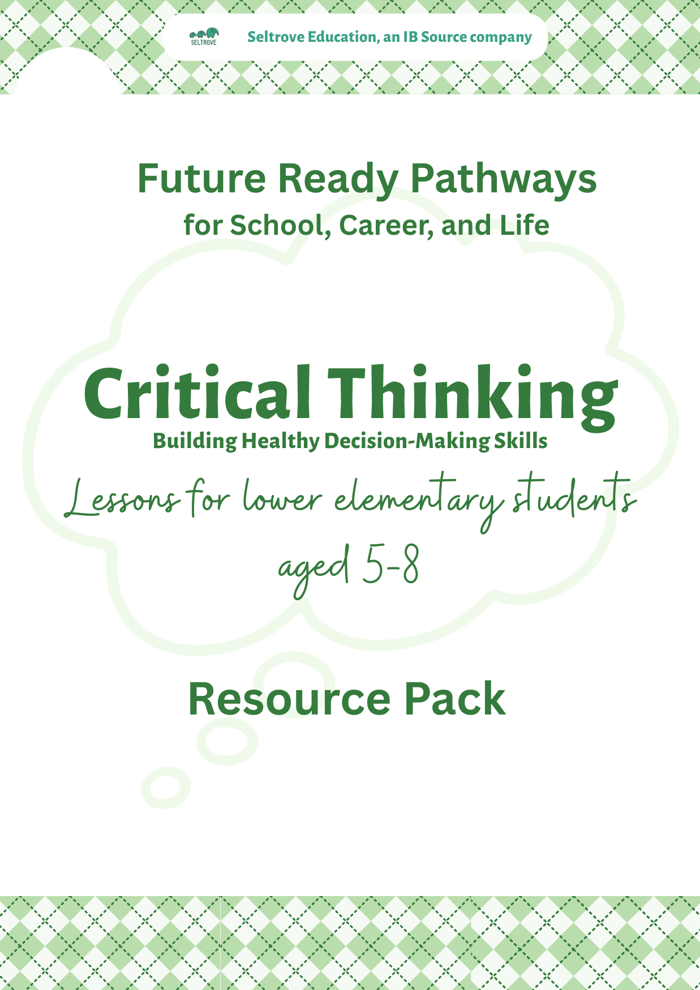
Critical Thinking: Building Healthy Decision-Making Skills (Lower Elementary) Teacher Resource Pack

$79.00
Critical Thinking Pack for Lower Elementary (Grades K–2) Downloadable & Printable Future Ready Education Resource Help your lower elementary students (ages 5–8) build the foundation for smart, healthy decision-making. Part of our Future Ready Education series, this pack is designed… read more