Table of Contents
Why Upper Elementary Is a Key Stage
Critical Thinking in Grades 3–5: Helping Kids Ages 8–11 Make Thoughtful Choices
By the time children reach grades 3–5, their thinking becomes more sophisticated. They’re moving beyond “right vs. wrong” answers and beginning to see that choices can be complex. They start making more independent decisions, navigating friendships with more awareness, and questioning ideas in school and daily life.
At this age, critical thinking is about reasoning, fairness, and reflection. Children are ready to practice weighing evidence, identifying patterns, and considering perspectives. These skills give them the tools to solve problems effectively, both in academics and in life.
The Core Skills of Critical Thinking for Ages 8–11
1. Weighing Pros and Cons
Students at this age can compare options before making a choice. For example:
“If I study first, I’ll have more time to play later.”
“If I trade my snack, I might regret not having it.”
Learning to pause and consider consequences helps children grow as independent decision-makers.
2. Using Evidence
In reading, science, or social studies, students begin citing evidence to support their answers. Extending this skill beyond schoolwork — into everyday decision-making — strengthens their ability to reason logically.
3. Recognizing Fairness
Children become more sensitive to fairness in friendships, games, and classroom situations. Critical thinking gives them a framework for discussing fairness and making decisions with empathy.
4. Reflecting on Choices
By grades 3–5, students can evaluate their own work and behavior. Asking “What worked? What could I do differently?” helps them see that reflection is a part of growth.
Strategies for Teaching Critical Thinking
1. Distinguish Facts from Opinions
Present statements and let students decide which are facts and which are opinions:
“The sun rises in the east.” (Fact)
“Summer is the best season.” (Opinion)
This builds awareness of how information works and encourages skepticism toward unverified claims.
2. Brainstorm Multiple Solutions
Encourage flexible thinking by asking for several answers to a problem. Example: “What are five different ways we could save water at home?” Students learn that there is rarely just one “right” answer.
3. Spot Patterns in Everyday Life
From math puzzles to observing nature, pattern recognition strengthens logical reasoning. Activities like predicting number sequences or finding patterns in stories sharpen problem-solving.
4. Use Scenarios for Decision-Making
Pose real-world situations:
“What should you do if two friends want you on their team?”
“How should you decide what book to read when your class has limited copies?”
These role-play scenarios help children practice applying reasoning to social choices.
5. Model Reflection
Teachers and parents can normalize reflection by asking:
“What was easy about this task?”
“What made it tricky?”
“What’s one thing you’d change next time?”
Reflection develops resilience and adaptability.
Everyday Opportunities for Critical Thinking
Critical thinking can be integrated into daily activities:
Cooking: Measure ingredients and predict outcomes.
Games: Discuss strategies in board games or puzzles.
Media: Ask children to question advertisements or videos.
By tying critical thinking to real life, students see its relevance beyond the classroom.
Long-Term Benefits
Students who practice critical thinking in upper elementary gain:
Academic strength across subjects.
Confidence in making independent decisions.
Social awareness, improving friendships and fairness.
Problem-solving skills that prepare them for middle school challenges.
Final Thoughts
Critical Thinking in Grades 3–5: Helping Kids Ages 8–11 Make Thoughtful Choices
Critical thinking in grades 3–5 empowers children to navigate both school and life with confidence. By encouraging fairness, evidence-based reasoning, and reflection, we prepare them for the complex choices of adolescence. At this stage, critical thinking is less about having the “right” answer and more about developing thoughtful habits that last a lifetime. Find out more at www.seltrove.com
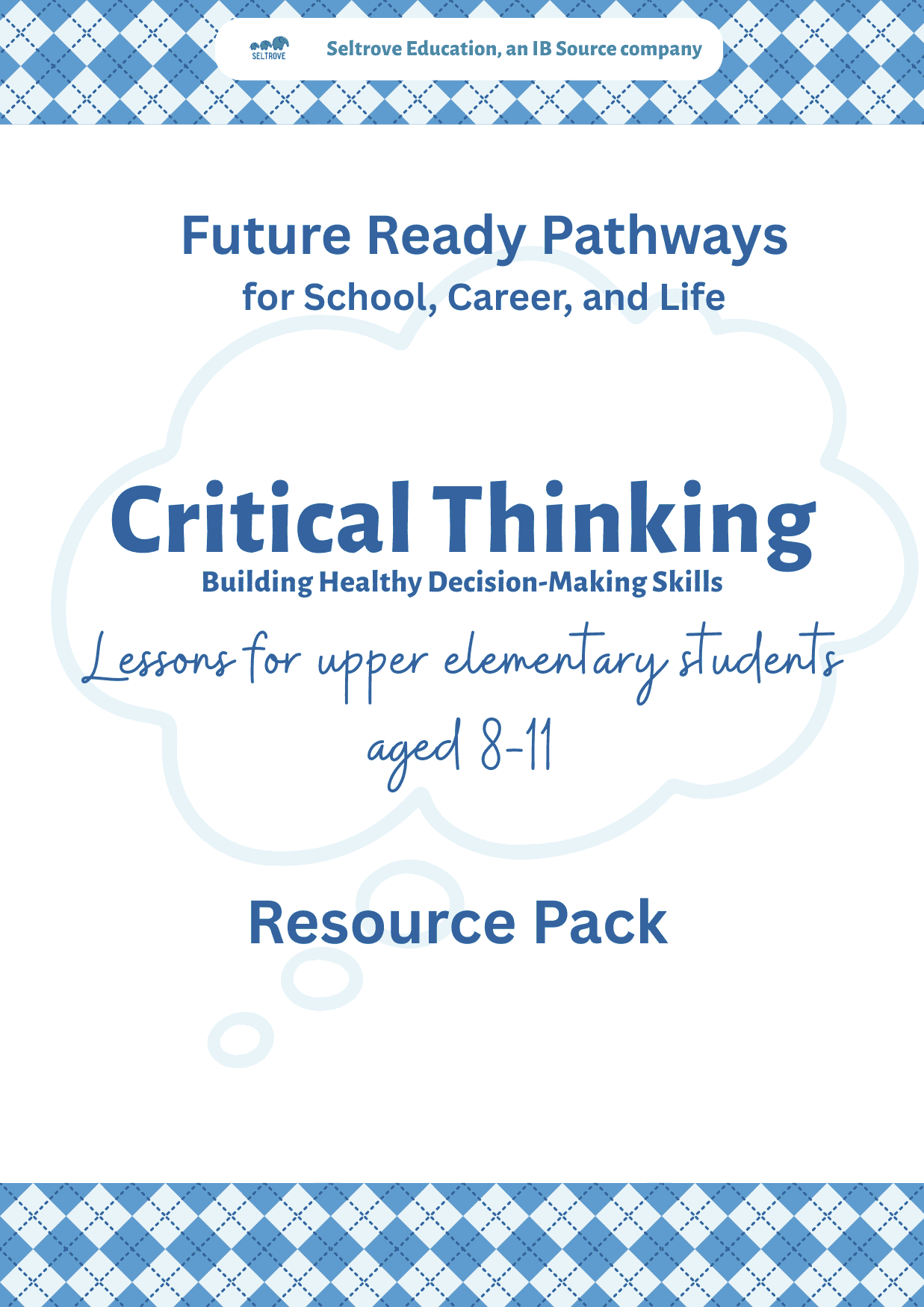
Critical Thinking: Building Healthy Decision-Making Skills (Upper Elementary) Teacher Resource Pack
$79.00
Critical Thinking Pack for Upper Elementary (Grades 3–5) Downloadable & Printable Future Ready Education Resource Give your upper elementary students (ages 8–11) the tools they need to become thoughtful, reflective problem-solvers. Part of our Future Ready Education series, this pack… read more